
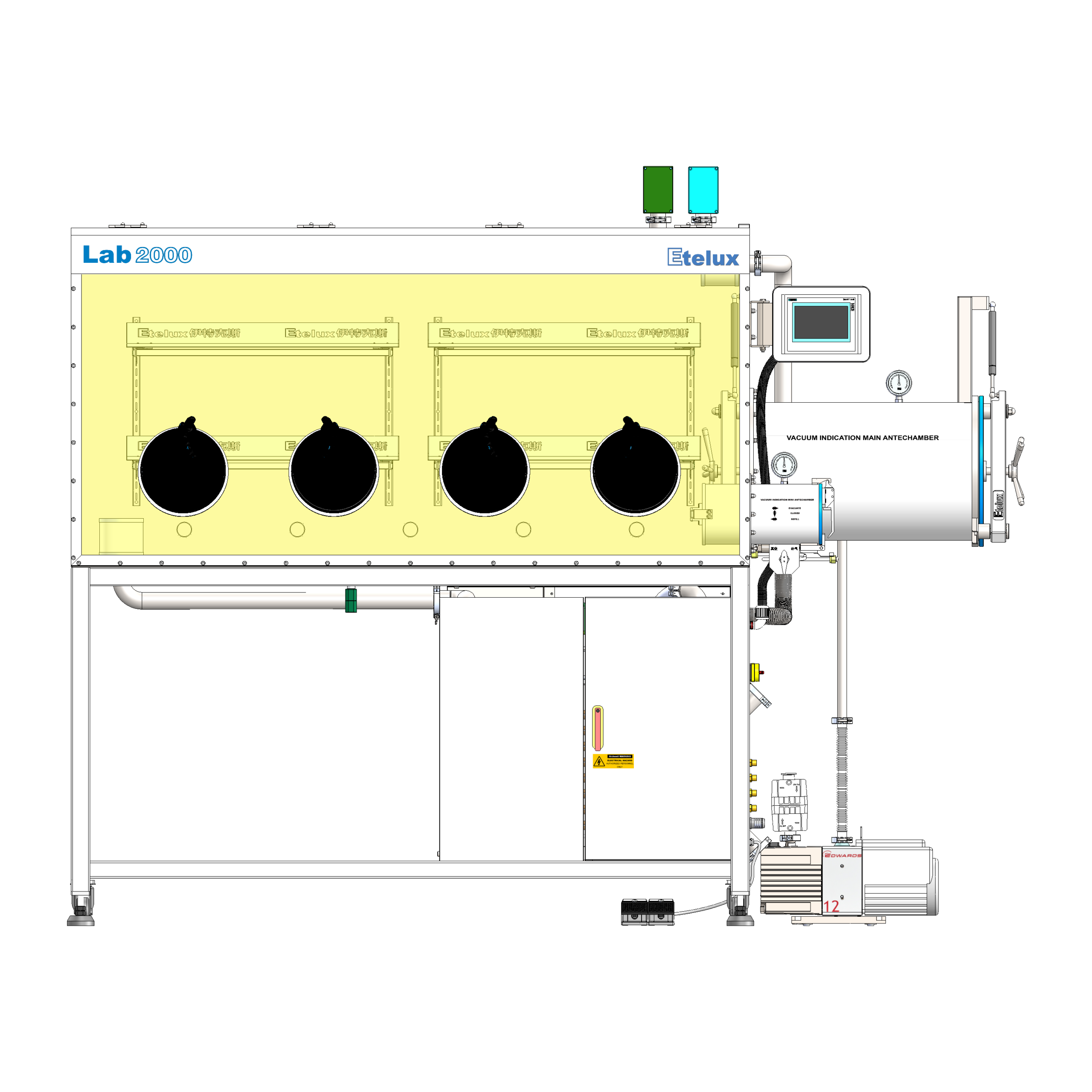
In materials science and chemistry laboratories, two pieces of equipment are often discussed side by side, yet people frequently struggle to know when to use which. One is the glove box, and the other is the vacuum dryer or vacuum drying oven. Both are associated with “air isolation” and “moisture removal,” but in essence, they are two systems with distinctly different roles.
If you’re torn over which equipment to choose, this article might help clarify your thinking.
Core Differences: At a Glance
Simply put, the vacuum dryer handles the “pre-treatment” stage, while the glove box is responsible for “full-process protection.”
| Comparison Aspect | Vacuum Dryer | Glove Box |
|---|---|---|
| Core Mission | Forcibly remove internal moisture and solvents from materials through a negative pressure and elevated temperature environment. | Create an inert gas shield to isolate materials from water and oxygen throughout all operations. |
| Application Stage | “Cleaning” before materials enter the box: Deep dehydration of raw materials and glassware. | “Full-scale surgery” after materials enter the box: Weighing, synthesis, assembly, and testing are all performed inside the box. |
| Typical Environment | High temperature plus low atmospheric pressure. | Ambient temperature plus inert gas positive pressure, with water and oxygen levels typically maintained at < 0.1 ppm. |
| What it can do | Dry lithium battery electrodes, remove high-boiling-point solvents, prevent thermal oxidation of heat-sensitive materials. | Assemble lithium batteries, handle sulfide electrolytes, culture anaerobic bacteria, perform OLED packaging. |
| What it cannot do | It can only “dry” and cannot provide environmental protection during active operations. Once materials are taken out, all previous effort is lost. | It cannot perform “deep dehumidification” of materials the way a vacuum dryer can. If the raw materials themselves contain moisture, the glove box’s purification system will become overwhelmed. |
Why Can’t They Replace Each Other?
Many people ask: since a glove box can control water and oxygen down to below 0.1 ppm, why do you still need to run materials through a vacuum dryer first?
The answer is that the glove box’s purification system is designed to “maintain” a clean environment, not to “dry” materials.
Take sulfide solid-state electrolytes, commonly used in lithium battery research, as an example. This type of material is extremely sensitive to moisture and will immediately hydrolyze upon exposure to air, releasing toxic hydrogen sulfide gas. The correct workflow is: first place the raw materials in a vacuum dryer and bake them at temperatures above 80°C for an extended period to remove chemically bound water molecules. The target is typically H₂O < 0.01 ppm. Only after this step is complete can the materials be transferred into the glove box for subsequent operations. If this step is skipped, even if the glove box’s water and oxygen readings meet specifications, the internally trapped moisture will slowly leach out during later testing, leading to performance failure and even safety hazards.
Conversely, if you only need to store some dried samples or perform simple dehumidification, a vacuum dryer is more than sufficient. Using a glove box as a drying oven is not only overkill but also accelerates the depletion of purification columns due to frequent introduction of moist materials.
How to Choose Based on Your Application Scenarios
Start by asking yourself two questions:
- Is my material sensitive to water and oxygen during subsequent operations?
- If not, and you only need drying or storage — choose the vacuum dryer.
- If yes, and operations must be isolated from air — you must choose a glove box.
- Does my material contain internal moisture, or is it just surface-damp?
- Internal moisture, such as chemically adsorbed water — you must first use a vacuum dryer for deep treatment.
- Surface dampness only, or if the operating environment is harsh — a glove box alone may suffice.
Practical recommendations:
- For lithium batteries, perovskites, organic synthesis, OLED: If you are working in these cutting-edge research fields, you typically need both pieces of equipment working together — the vacuum dryer for pre-treatment, and the glove box for core operations.
- For routine drying, solvent removal, or heat-sensitive sample testing: A single vacuum dryer is sufficient, and even a conventional forced-air drying oven can meet some of these needs.
- For anaerobic bacteria culture or handling toxic and hazardous substances: Go straight for the glove box, as it provides isolation and protection functions.
Summary
Stop agonizing over a binary choice. In real air-sensitive materials research, these two are partners, not rivals.
The vacuum dryer is the “gatekeeper” , responsible for kicking out moisture from every corner of the material; the glove box is the “operating room” , responsible for performing delicate manipulations in a sterile, oxygen-free environment. Once you understand this workflow, you’ll know exactly where to invest your budget.
Related Reading
Mobile Glovebox Fixed Configuration: Advantages Analysis
Fully Automated Purification Glove Boxes: Why They Are Replacing Traditional Models