
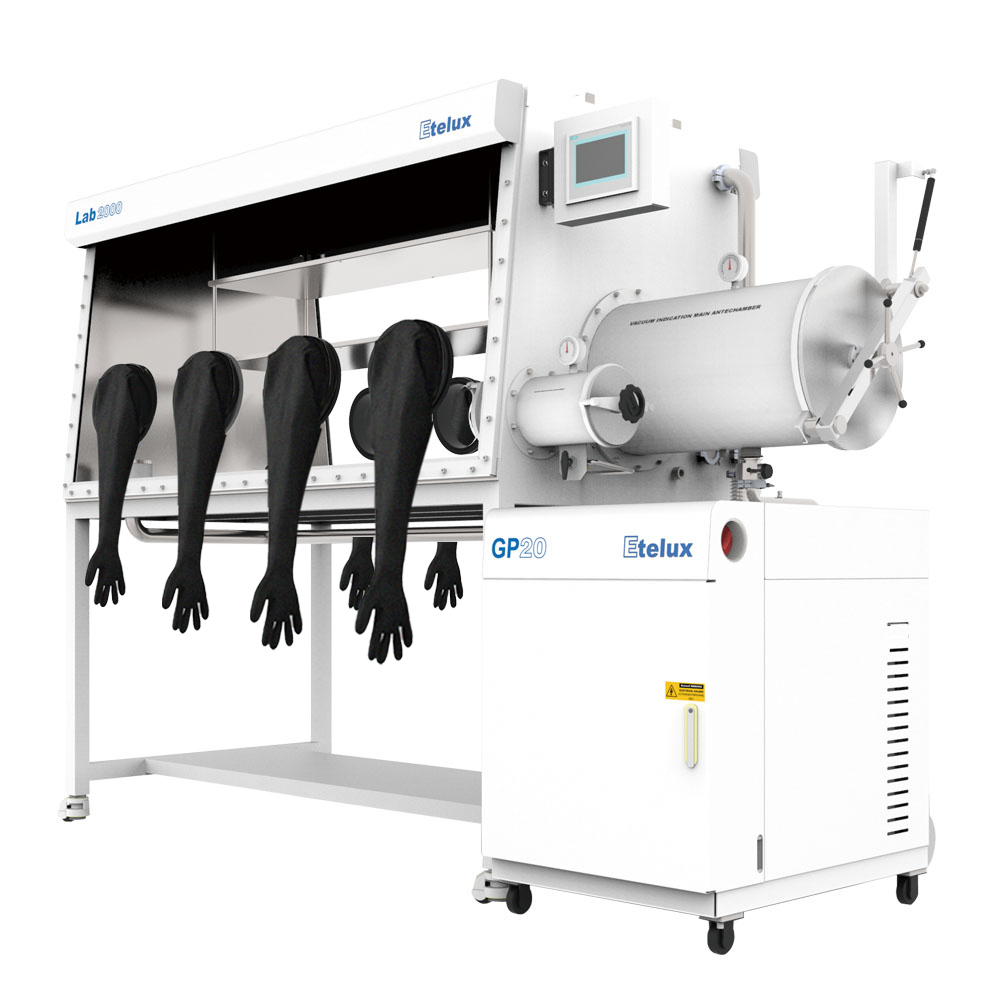
In laboratories and high-end manufacturing, glove boxes serve as the “guardians” that isolate water and oxygen to create inert environments. But in 2026, a clear trend is emerging: traditional manual models are being rapidly replaced by fully automated purification glove boxes.
This is not just a simple equipment upgrade—it’s a paradigm shift from “manual monitoring” to “intelligent operation.” Let’s examine the rationale behind this transformation.
Traditional Glove Boxes: Adequate, but Labor-Intensive
The classic design of standard glove boxes has been proven over decades of use. They offer high reliability and affordable pricing, and they remain widely adopted in budget-conscious university laboratories and startups. However, their shortcomings are equally evident:
1. Dependence on Human Operation
Laboratory personnel must regularly check water and oxygen levels, manually initiate purification cycles, and determine the timing for regeneration while operating valves manually. Traditional glove boxes cannot operate unattended during overnight or weekend continuous runs.
2. Environmental Fluctuations
Manual operations lack the consistency of automated systems. Variations in operating habits among different users can lead to inconsistent experimental conditions—a significant concern for processes that demand extreme stability, such as perovskite thin-film deposition and OLED encapsulation.
3. Reliance on Manual Data Recording
Data logging in traditional glove boxes depends on manual entry, which is not only inefficient but also makes compliance difficult in biopharmaceutical GMP scenarios that require strict data traceability.
Fully Automated Purification Glove Boxes: Three Core Advantages
Advantage 1: Truly “Unattended” Operation
Fully automated glove boxes leverage Siemens PLCs or embedded microprocessors to achieve fully automated management of purification, regeneration, water/oxygen monitoring, and pressure control. The system automatically determines when to initiate and stop purification based on sensor data, and automatically triggers alarms when water or oxygen levels exceed preset thresholds.
This means: laboratory personnel no longer need to constantly monitor the equipment. The system runs continuously 24/7, with automatic switching between purification columns and automatic regeneration cycles—all without human intervention.
Advantage 2: An Order-of-Magnitude Improvement in Environmental Precision
Automated systems are equipped with high-precision water/oxygen sensors, temperature sensors, and pressure sensors, with all operating parameters displayed in real time on touchscreen interfaces. Control accuracy far surpasses manual operation—pressure can be automatically regulated within a set range of ±10 mbar to ±15 mbar, with the system initiating auto-protection when parameters drift outside acceptable limits.
More importantly, intelligent environmental management has evolved from “passive maintenance” to “active optimization.” Some next-generation systems integrate edge-computing AI monitoring modules that collect 12 parameters in real time and use machine learning to predict potential failures with 24-hour advance warning. This proactive maintenance capability is invaluable in semiconductor “zero-downtime” scenarios.
Advantage 3: Traceable Data and Remote Monitoring
Fully automated glove boxes typically include comprehensive data logging functionality, recording historical data such as water/oxygen levels, operating temperatures, and purification cycle counts. Data can be exported and used for trend analysis. Some high-end models also support IoT connectivity, enabling real-time equipment status synchronization, proactive alarm notifications, online diagnostics, and remote service requests.
For laboratories and production lines that must comply with GMP standards or quality management system certifications, these features are essentially mandatory.
Energy Consumption and Cost: Automated Doesn’t Necessarily Mean More Expensive
Conventional wisdom holds that automated equipment comes with higher upfront costs and more complex maintenance requirements. However, the total cost picture tells a different story.
Take energy consumption: traditional large-scale glove box systems consume approximately 100,000 kWh annually. Through optimized circulation systems, high-efficiency molecular sieves, and variable-frequency compressors, next-generation intelligent systems can reduce energy consumption by more than 30%, bringing annual consumption down to about 70,000 kWh.
Consider seal maintenance as another example: traditional systems require seal replacement every 3–6 months. In contrast, high-end automated systems with multi-layer composite sealing structures can withstand over 100,000 opening/closing cycles and operate continuously for 12 months without seal replacement.
The purchase price may be higher, but the long-term TCO (Total Cost of Ownership) could be significantly lower.
When Should You Make the Switch?
If any of the following scenarios apply to you, the value of a fully automated purification glove box will far outweigh its cost:
- Continuous operation required: Overnight, weekend, or even 24/7 continuous experimentation or production
- Extremely high environmental stability requirements: Water/oxygen fluctuations directly impact experimental results or product yields
- Data traceability needed: Compliance with GMP, ISO, or internal quality system requirements
- Cost reduction and efficiency improvement desired: Reduced manual inspection frequency, lower energy consumption, and decreased long-term maintenance costs
Conclusion
Traditional glove boxes won’t disappear overnight, but fully automated purification glove boxes are becoming the mainstream choice. This is not merely about adding an “automated” option alongside “manual”—it fundamentally changes the relationship between equipment and people: from “people managing equipment” to “equipment serving people.”
If you’re planning a new laboratory or production line, I recommend prioritizing automated solutions. If you already have traditional equipment, consider evaluating upgrade options or modular retrofits. After all, the decisions you make today will determine your efficiency and competitiveness for the next three to five years.
Related Reading:
Comprehensive Glove Box Purification System Upgrade & Retrofit Solutions | Breathe New Life into Aging Equipment
Precautions for Long-Term Shutdown and Storage of Glove Boxes