
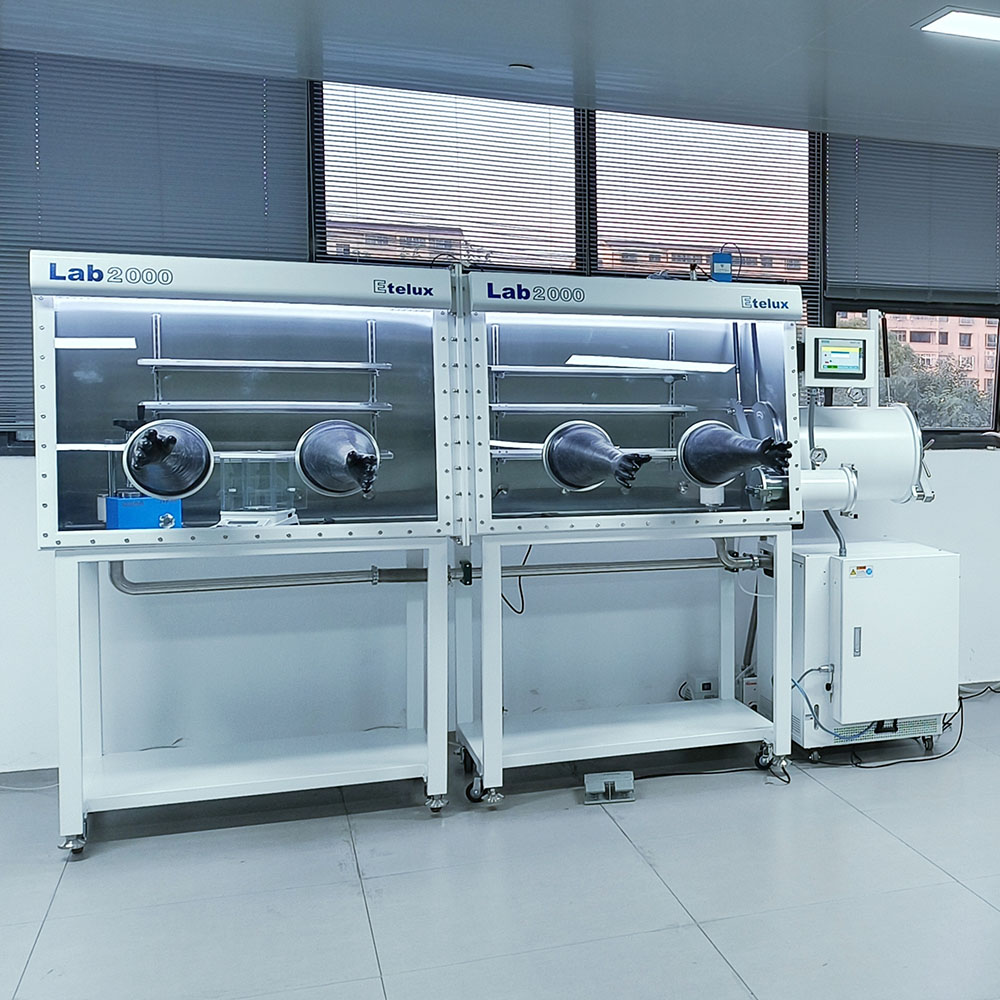
When selecting laboratory equipment, glovebox choices often present a classic dilemma: should you choose a mobile unit for greater flexibility, or a fixed unit for better stability? The mobile glovebox in fixed configuration offers a solution that combines the strengths of both approaches. This article provides an in-depth analysis of the unique value and application scenarios of this equipment type.
I. What Is a Mobile Glovebox in Fixed Configuration?
A mobile glovebox in fixed configuration, as the name suggests, is a glovebox system equipped with a movable base featuring casters, yet designed to be used in a stationary manner. It delivers the stability of a fixed installation while retaining the ability to relocate when necessary.
Based on material composition, gloveboxes currently available on the market fall into two main categories:
Acrylic material: Light transmittance can reach over 92%, allowing 360° visibility of internal operations. It is lightweight and cost-effective. However, it has poor heat resistance and relatively high gas permeability, making it unable to maintain extremely low water and oxygen levels over extended periods.
Stainless steel material: Offers high structural strength and excellent sealing performance, capable of maintaining consistently low water and oxygen environments over the long term while withstanding negative pressure conditions. Its drawbacks include greater weight and higher procurement costs, making it suitable for applications with stringent atmosphere control requirements.
The fixed configuration typically includes a dedicated base stand, ensuring operational stability while preserving mobility through caster design.
II. Core Advantages of the Fixed Configuration
1. Stability and Safety
Fixed-configuration equipment does not shift due to accidental contact during operation, which is particularly critical for applications involving precision weighing and hazardous chemical handling. Gloveboxes equipped with high-efficiency filtration systems can provide reliable operator protection through negative or positive pressure control.
2. Better Suited for Long-Term Low-Water and Low-Oxygen Experiments
When experiments require long-term stability of water and oxygen levels, portable units that rely solely on “evacuate and refill” procedures are often insufficient. The fixed configuration can be integrated with circulation purification systems, oxygen and moisture analyzers, and regeneration systems to sustain a stable inert gas atmosphere over extended periods.
3. Enhanced Operator Experience
The fixed base stand can be ergonomically designed to adjust working height. With high-intensity fluorescent lighting and wide, removable viewing windows, operator fatigue is significantly reduced during prolonged use. For multi-operator setups, the fixed configuration can be customized in terms of glove port spacing and viewing window angles to prevent mutual interference.
4. Strong Expandability
Fixed-configuration equipment can accommodate a variety of accessories: gas purification systems, temperature and humidity control modules, vibration-isolated work surfaces, anti-static coatings, and more. This modular expansion capability is difficult to achieve with lightweight mobile alternatives.
III. Application Scenario Comparison
| Scenario Type | Mobile Portable | Mobile Fixed | Fully Fixed |
|---|---|---|---|
| Teaching demonstrations, temporary experiments | Excellent | Good | Fair |
| Long-term low-water/low-oxygen research | Fair | Excellent | Excellent |
| Shared equipment across multiple research groups | Good | Excellent | Good |
| Pharmaceutical and chemical production floors | Fair | Excellent | Excellent |
| Laboratories with limited space | Excellent | Good | Fair |
| Equipment requiring periodic relocation or cleaning | Excellent | Excellent | Fair |
IV. Selection Recommendations
Typical scenarios for choosing a mobile glovebox in fixed configuration include:
- Laboratories that need to reconfigure equipment layouts across different rooms or areas
- Situations requiring periodic equipment relocation for deep cleaning or maintenance
- Laboratories with limited space that need both flexibility and long-term experimental stability
- Shared equipment environments where “movable yet fixable” flexibility is essential
Conclusion
The mobile glovebox in fixed configuration is not simply a compromise solution; it represents an optimal balance among stability, safety, and flexibility. For most research and industrial laboratories, it meets the demanding requirements of long-term low-water and low-oxygen experiments while avoiding the limitation of fully fixed equipment that is difficult to relocate once installed.
When making a selection, we recommend evaluating based on sample sensitivity, operational workflow, and future expansion needs, rather than comparing price alone. For more product specifications and customization options, please feel free to contact us for professional guidance.
Related Reading
Explosion-Proof Glovebox: Usage Guidelines & Selection Guide
Small Benchtop Glove Box vs. Large Industrial Glove Box: How to Choose?