
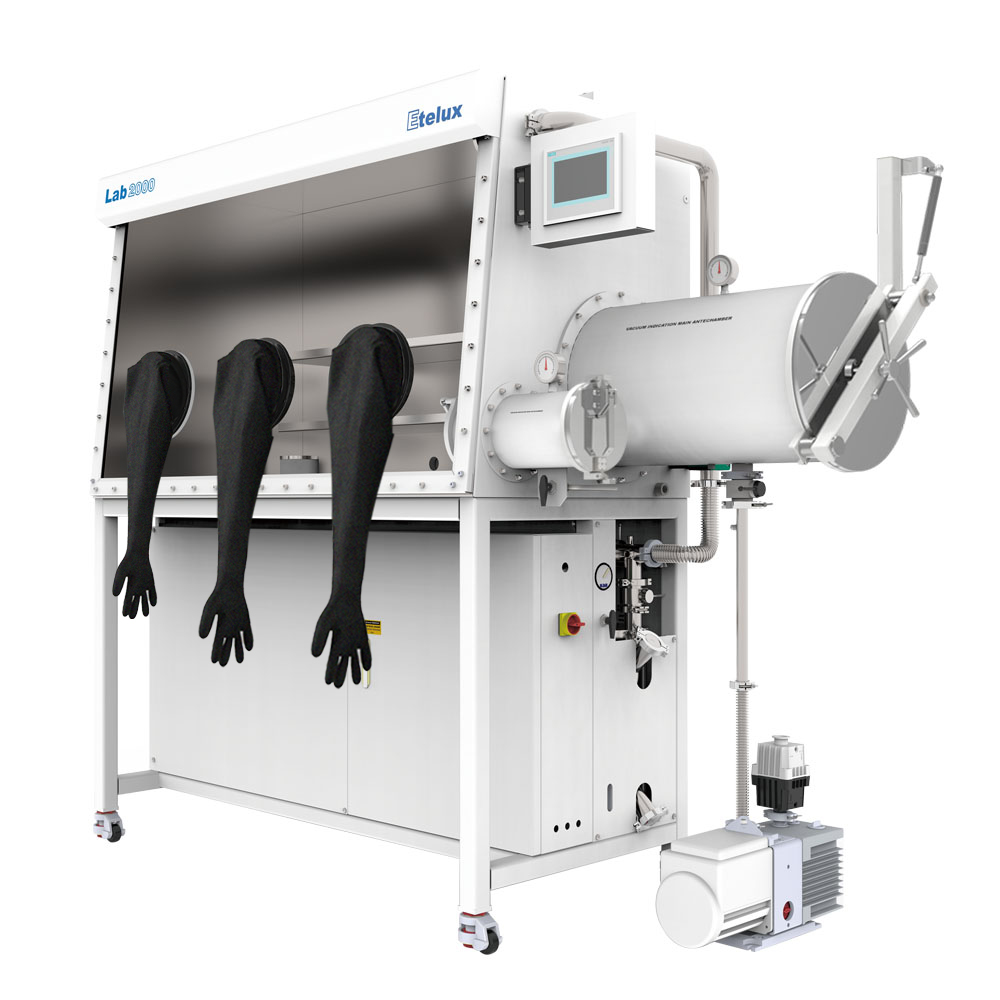
Article Highlights: Is your glove box purification efficiency declining with rising maintenance costs? This article details three upgrade and retrofit solutions—quick-release purification columns, energy-saving pressure balance systems, and independent regeneration workstations—with a side-by-side comparison to help you find the optimal path forward.
Table of Contents
I. Three Signs That Tell You It’s Time for an Upgrade
II. Three Directions for Glove Box Purification System Upgrades
III. Solution Comparison and Selection Recommendations
IV. Key Maintenance Points After Upgrade
Conclusion
I. Three Signs That Tell You It’s Time for an Upgrade
The core of a glove box lies in its recirculation purification system, which uses a blower to drive the internal gas through purification columns containing copper catalyst and molecular sieves to continuously remove oxygen and moisture, maintaining water and oxygen levels stably below 1 ppm. However, when the following situations occur, it indicates that a glove box purification system upgrade is needed:
1. Difficult Purification Column Replacement, Time-Consuming Maintenance
In traditional designs, purification columns are secured to the box body with bottom screws. During replacement, operators must perform complex manual operations through the gloves inside the chamber—described as “extremely inconvenient and time-consuming.” If experimental workloads are heavy, this maintenance approach severely impacts work efficiency. The currently mainstream quick-release purification column retrofit solution can effectively address this issue.
2. Poor Regeneration Results, Low Purification Material Utilization
Some equipment suffers from unreasonable purification column structural design, improper aspect ratios, and imprecise regeneration gas flow control, resulting in incomplete regeneration each time, low utilization of purification materials, and the need for frequent regeneration cycles that still fail to restore optimal purification capacity.
3. Excessive Gas Waste, Rising Operating Costs
Each time an operator inserts hands into the gloves, internal pressure rises and inert gas is forced out; when hands are withdrawn, fresh gas must be replenished. This repeated exhaust-and-refill cycle creates substantial gas waste, translating to significant long-term expenses. Installing an energy-saving pressure balance system can dramatically improve this situation.
II. Three Directions for Glove Box Purification System Upgrades
For the pain points mentioned above, current industry mainstream upgrade solutions can be divided into three directions, allowing users to flexibly choose based on equipment condition and budget.
Direction 1: Quick-Release Purification Column Structural Upgrade
Core Concept: Replace the traditional screw-fastening method with a modular quick-release structure for rapid purification column replacement.
Manufacturers such as Mikrouna have introduced innovative designs: a circular base plate combined with a hydraulic-cylinder-driven pressure plate fixation system, eliminating the traditional screw fastening approach. During replacement, simply activate the hydraulic system to release pressure, and the pressure plate disengages to unlock the module; after replacement, activate the hydraulic system again, and the pressure plate applies even force to securely hold the module in place. Some designs further incorporate motor-driven precision movement systems that use high-precision electric slide rails to move the purification column and blower module to the exterior of the chamber for operation—completely eliminating the awkwardness of “reaching inside the box through gloves for disassembly.”
Applicable Scenarios: High-load usage environments requiring frequent purification column replacement or regeneration.
Direction 2: Energy-Saving Pressure Balance System Upgrade
Core Concept: Install a bladder-type balance structure to recover inert gas displaced during operation.
This solution operates on a simple principle: install a gas bladder on the chamber. When an operator inserts hands into the gloves, the displaced inert gas is not vented directly to the atmosphere but is temporarily stored in the bladder; when hands are withdrawn and chamber pressure drops, the stored gas automatically flows back to replenish the chamber. This design can significantly reduce the frequency of cylinder gas refills, resulting in substantial operational cost savings.
Applicable Scenarios: Laboratories with high-frequency operations where inert gas, especially argon, costs are significant.
Direction 3: Independent Regeneration Workstation Model
Core Concept: Decouple the regeneration function of purification units from the glove box itself, centrally handled by an external independent workstation.
This represents a more thorough retrofit approach: the glove box itself no longer requires integrated heating, temperature control, hydrogen dosing, pressure reduction, or other regeneration function modules. Purification units adopt a detachable design—once saturated, they are removed and sent to a central regeneration workstation for unified processing. This workstation can simultaneously regenerate multiple purification units, with precise PLC control over temperature, pressure, gas flow, and other parameters.
Advantages of this model:
Lower per-unit equipment cost: Glove boxes no longer require complex integrated regeneration modules;
Superior regeneration quality: Professional equipment combined with optimized regeneration processes, such as evacuation to 100 Pa, heating to 250°C for 1 hour, introduction of 5% hydrogen/nitrogen mixed gas—cycle repeated 5 times, achieves more thorough regeneration;
Resource conservation: Regeneration gases such as hydrogen are used centrally, avoiding the safety risks of individual procurement and storage at each facility.
Applicable Scenarios: Large R&D centers or production facilities with multiple glove boxes.
III. Solution Comparison and Selection Recommendations
| Solution Type | Core Advantage | Investment Cost | Target Users |
|---|---|---|---|
| Quick-Release Purification Column Upgrade | Significantly improved maintenance efficiency | Medium | Users requiring frequent column replacement |
| Energy-Saving Pressure Balance System | Long-term gas cost savings | Low | High-frequency operation scenarios |
| Independent Regeneration Workstation | Best overall cost-effectiveness, highest regeneration quality | High | Multi-unit centralized management |
Selection Recommendations:
Single unit, limited budget: Prioritize the Energy-Saving Pressure Balance System—low investment with quick returns;
Single unit, high maintenance frequency: Choose Quick-Release Purification Column Upgrade—maximizes labor savings;
Multiple units, long-term operation: Recommend the Independent Regeneration Workstation Model—superior overall benefits.
💡 Further Reading: If you’re still debating whether to use nitrogen or argon for your glove box, refer to our comparison guide: Nitrogen vs Argon Glove Box Differences Explained
IV. Key Maintenance Points After Upgrade
Regardless of which glove box purification system upgrade and retrofit solution you choose, the following maintenance details require attention after upgrading:
1. Precise Control of Regeneration Process Parameters
Different stages of regeneration consume varying amounts of reducing gas. It is recommended to use PLC programs for automated control of time and gas flow rates, enabling on-demand supply of reducing gas and improving regeneration efficiency.
2. Regeneration Off-Gas Treatment
During regeneration, acidic gases adsorbed in the purification column are released along with the exhaust. Direct emission may pollute the environment and affect human health. An alkaline solution scrubbing device installed at the exhaust port is recommended, allowing acidic gases to be neutralized before discharge.
3. Regular Calibration of Water and Oxygen Sensors
Oxygen analyzers, typically ZrO₂-based sensors, and dew point meters, P₂O₅-based sensors, serve as the “eyes” for judging purification effectiveness. Calibration at least once per year is recommended to ensure reading accuracy.
Conclusion
The upgrade and retrofit of glove box purification systems is fundamentally an efficiency revolution—replacing cumbersome manual operations with smarter structural designs, and replacing “gut-feeling” maintenance approaches with more scientific regeneration processes. Whether installing quick-release structures, introducing energy-saving bladders, or embracing independent regeneration workstations, the core objective remains the same: making equipment more stable, simpler to maintain, and more cost-effective to operate.
If your glove box is struggling with declining purification efficiency and rising maintenance costs, use the three directions outlined in this article as a reference to find the upgrade path that best fits your needs.
📌 Related Reading
What Is the Qualified Standard for Glovebox Water and Oxygen Levels?
Standard Glovebox Configuration Solutions for Research and University Laboratories
Pharmaceutical API Moisture-Proof Isolation Glove Box Industry Solution – gloveboxes
What maintenance challenges are you facing with your glove box? Feel free to leave a comment below!