
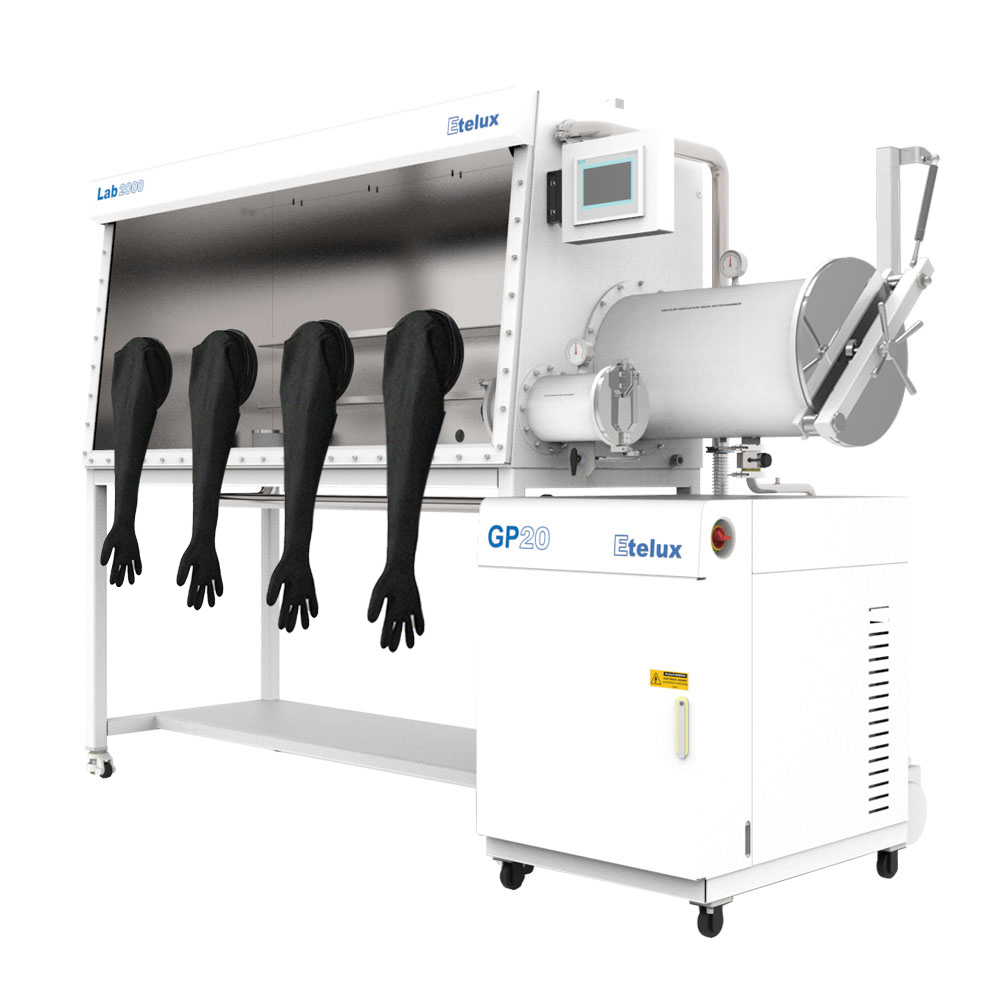
If you walk into a modern solid-state battery laboratory or semiconductor packaging workshop today, you will notice a subtle but profound change taking place with gloveboxes. It is no longer just a sealed box in the corner that requires manual operation through gloves. Robotic arms precisely grasp materials inside the enclosed chamber, laser welding heads complete micron-level welds in an inert atmosphere, and sensors continuously transmit oxygen content data to engineers’ phone screens several kilometers away.
This change is not isolated. According to comprehensive data from multiple market research institutions, the global glovebox market was worth approximately USD 1.48 billion in 2026 and is expected to grow to USD 1.9 billion by 2030, maintaining a compound annual growth rate of around 6.5%. The numbers themselves are not astonishing, but the driving forces behind the growth deserve attention: what is driving market expansion is no longer “buying a few more devices” in laboratories, but the fact that gloveboxes are being redefined as critical process nodes in high-end manufacturing workflows.
I. The Push from Downstream Industries: When Batteries and Chips Demand Extreme Environments
The first driving force behind the evolution of glovebox technology comes from downstream industries’ requirements for water and oxygen control precision, which are advancing from the ppm level toward the ppb level.
Solid-state batteries are the most typical illustration of this trend. The assembly environment for traditional liquid lithium batteries typically requires a dew point below minus 40 degrees Celsius, while the sulfide electrolytes in solid-state batteries are sensitive to moisture by several orders of magnitude more. Processes such as tab welding, shell packaging, and sample transfer must be completed in an environment where both oxygen and water content are below 0.1 ppm, otherwise interfacial impedance will deteriorate sharply. This means that the glovebox has transformed from an auxiliary tool into a process step itself that determines battery performance.
The semiconductor field is no different. As chip manufacturing processes advance toward smaller nodes, the tolerance for particle contamination and humidity during wafer handling, alignment, and bonding before packaging continues to narrow. Manufacturing solutions already exist that integrate wafer transfer robots, visual positioning systems, and SMIF opening devices entirely inside gloveboxes, forming a closed-loop process from picking to packaging.
This shift in demand is reshaping the design logic of gloveboxes: airtightness is no longer the only metric. Atmosphere stability, operational precision, and process continuity are becoming equally important considerations.
II. Automation and Robotic Integration: No More Hands Needed Inside the Glovebox
The operational bottleneck of traditional gloveboxes is very intuitive: human arms reach into the chamber through gloves, the range of motion is limited, operational precision depends on personal experience, and every material transfer may cause atmosphere fluctuations. In scenarios requiring continuous production or highly repetitive operations, this model has become unsustainable.
The current trend is clear and definitive: replacing human hands with robotic arms.
In automated production lines for lithium battery electrode materials, custom-developed glovebox systems can already integrate automatic feeding, conveying, metering, and transfer modules, achieving fully enclosed automation from material input to finished product output, eliminating the risk of materials contacting air. The logistics and warehousing segment is also being redesigned, with warehouse management systems integrated inside gloveboxes to achieve unmanned warehousing and digital traceability under conditions where the leakage rate is below 0.005 vol%/h and both water and oxygen content are below 1 ppm.
The significance of this trend for users is that the barrier to using gloveboxes is lowering, while the consistency and traceability of output are improving. Operators no longer need to endure arm soreness and attention depletion for extended periods, instead focusing on program setting, exception handling, and data analysis. The glovebox is transforming from a manual labor site into a data-driven process platform.
III. Specialization and Integration: One Device, One Process
The market share of general-purpose gloveboxes is being eroded by specialized systems. The most typical example is the glovebox laser welding system, which integrates a high-purity inert atmosphere environment with a laser welding unit into one entity, serving the precision packaging needs of solid-state batteries, micro batteries, sensors, and medical implants.
The value logic of this system is entirely different from that of traditional gloveboxes. What users purchase is no longer a box that provides an inert environment, but a manufacturing unit that has undergone process validation. Atmosphere control, laser parameters, welding paths, fixture design, and visual positioning are integrated into a single control software, with oxygen content data and welding process parameters recorded synchronously, forming a complete process data package. Industry estimates show that gross margins for customized multi-chamber systems for solid-state battery pilot lines or semiconductor packaging can reach 40% to 55%.
Similar integration logic is being replicated in more fields. Powder impedance measurement systems in the pharmaceutical field have already achieved completing the entire measurement process inside a glovebox, protecting researchers from exposure to harmful gases while also ensuring that samples are not contaminated during transfer.
The other side of specialization is modular design. Users can combine different functional modules according to process requirements, rather than paying a premium for features they do not need. Market data shows that the adoption rate of modular gloveboxes has reached 39% and is still rising.
IV. Intelligence and Datafication: Making Atmosphere Control Visible and Accountable
The intelligence of gloveboxes is not as simple as adding a touchscreen. The real change is happening at the data level.
A new generation of systems is continuously recording and uploading parameters such as oxygen content, water content, pressure, temperature, and gas consumption, supporting remote monitoring and trend analysis. For pharmaceutical users, this means meeting compliance audit requirements for data integrity; for battery R&D teams, this means correlating battery performance data with atmosphere fluctuations during the preparation process to identify hidden variables affecting yield.
Advances in sensor technology are also lowering the barrier to intelligence. Energy-efficient vacuum gloveboxes equipped with sensors now account for 27%, and IoT-enabled vacuum control upgrades have grown by 26%. These figures indicate that intelligence is no longer exclusive to high-end custom projects but is penetrating into mainstream products.
An easily overlooked trend is predictive maintenance. By continuously monitoring the regeneration efficiency of gas purification columns and the operating status of vacuum pumps, the system can remind users to replace consumables or check for leak points before oxygen content begins to drift. For users who rely on gloveboxes for continuous production, this capability is far more valuable than post-event alarms.
V. Regional Landscape and Supply Chain Reshuffling
The regional distribution of the glovebox market is undergoing subtle but important changes. The Asia-Pacific region currently holds approximately 42% of the market share, with China, Japan, and South Korea being the main demand centers. However, the driving force behind growth is shifting: demand in the Chinese market is transitioning from primarily university research procurement toward equipment investment in battery pilot lines and semiconductor packaging production lines.
Meanwhile, tariffs and trade policies are reshaping supply chains. Rising costs of stainless steel materials, seals, and control components are particularly noticeable for high-specification laboratory gloveboxes, with the Asia-Pacific and European markets bearing the brunt. But this pressure is also spurring localized manufacturing and customization capabilities, with some regional manufacturers gaining share that previously belonged to imported brands.
The European market presents a different characteristic: manufacturers in Germany and Switzerland continue to maintain technological leadership in high-vacuum transfer technology and energy efficiency optimization, and European buyers have higher requirements for energy consumption and environmental compliance of gas purification systems. The difference between this high-end specialization route and the large-scale application route of the Chinese market may further widen in the coming years.
Conclusion
The future landscape of glovebox technology is becoming clear: it is no longer a passive isolation container, but an active process environment platform. Automation has replaced repetitive labor, integration has consolidated process steps within the same atmosphere boundary, and datafication has moved atmosphere control from empirical judgment toward measurable, traceable engineering parameters.
For glovebox users and purchasers, this means that evaluation criteria need to be updated. The numbers for oxygen and water content remain important, but equally worth asking are: Can this device seamlessly integrate with my existing process workflow? Are its data interfaces open? Do its automation modules reserve space for my future capacity expansion?
Related Reading
Glovebox vs Schlenk Line: A Comprehensive Comparison of Advantages and Disadvantages
New Trends in the Inert Atmosphere Glove Box Industry in 2026: From Standalone Equipment to Intelligent System Solutions