
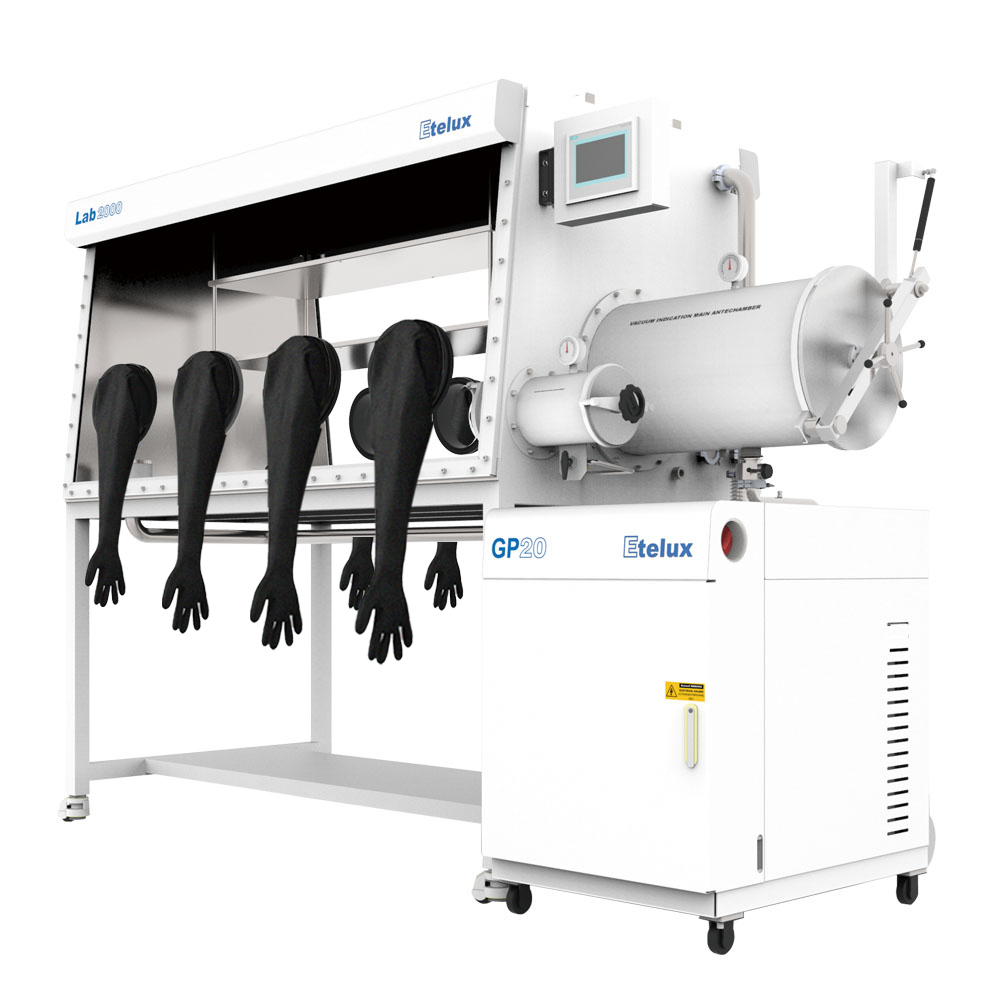
In 2026, the inert atmosphere glove box industry is undergoing profound transformation. This once relatively niche laboratory equipment market now stands at the intersection of booming new energy, semiconductor, and cutting-edge materials science sectors.
As a practitioner who has been following this field for a long time, I’d like to share with you the core trends shaping the industry in 2026, and what these changes mean for your R&D and production operations.
I. Steady Market Growth with a Clear Shift Toward Premiumization
In 2026, the global glove box market maintains a steady growth trajectory. Taking the single-sided three-glove glove box segment as an example, global sales in 2025 reached approximately $46 million, with projections of $57 million by 2032, representing a compound annual growth rate (CAGR) of about 3.1%. The higher-end temperature-and-humidity-controlled glove box market is expected to grow from $240 million in 2025 to $340 million by 2032, at a CAGR of 5.2%.
The core drivers behind this growth stem from three main areas: explosive demand from the new energy industry, upgrading requirements from semiconductor and high-end manufacturing, and continued increases in R&D investment. Frontier fields such as solid-state batteries, perovskite photovoltaics, and silicon-carbon anodes impose extremely stringent requirements on experimental environments—water and oxygen levels often need to be controlled below 0.1 ppm. This demand for “ultimate purity” is reshaping the industry’s entire technology roadmap.
II. Four Core Trends Are Taking Shape
Trend 1: Evolution Toward “Picogram-Level” Environmental Control
In the past, “water/oxygen < 1 ppm” was considered a high standard. Today, leading manufacturers are pushing the limits toward 0.1 ppm or even lower. Companies such as Changshu Tongrun have launched ultra-purification glove box systems with water/oxygen levels ≤ 0.1 ppm, while Wigotech has achieved stable environments with water/oxygen < 1 ppm and nitrogen < 1 ppm through patented leak-free sealing technology.
What does this mean in practice? For perovskite solar cell R&D, even trace amounts of water or oxygen ingress can cause material degradation and efficiency decay. More stringent environmental control directly impacts the reproducibility of research results and product yield rates.
Trend 2: Automation and System Integration Become the Differentiator
Standalone equipment is giving way to “system solutions.” A notable trend in 2026 is that glove boxes are no longer isolated units; they are being deeply integrated with liquid dispensing systems, coating equipment, in-line inspection instruments, robotic arms, and more to form complete closed-loop process systems.
For example, Changshu Tongrun recently delivered a perovskite tandem glove box system that integrates the entire “dispensing–sample preparation–film fabrication” workflow. Abona Technology’s “Nebula Series” enables flexible combination of automated liquid injection, vacuum encapsulation, wafer transfer, and other modules, reducing delivery lead times from 60 days to 30 days.
Industry competition is shifting from “who can build the equipment” to “who can deliver the system.” Companies with vertical integration capabilities and the ability to provide customized solution designs will hold a clear competitive advantage.
Trend 3: AI Empowerment—From “Passive Maintenance” to “Active Optimization”
In 2026, AI technology is beginning to genuinely integrate into glove box operations and maintenance. Abona Technology’s next-generation products incorporate edge-computing AI monitoring modules that collect 12 parameters in real time—including oxygen, moisture, pressure, and temperature—and use machine learning to predict potential failures with 24-hour advance warning. One leading lithium battery manufacturer reported a 50% improvement in operational efficiency after implementation.
The value of intelligent systems goes beyond cost reduction and efficiency gains. In “zero-downtime” scenarios such as semiconductor manufacturing, early warning systems can prevent losses of millions or even tens of millions of dollars. At the same time, GMP data traceability requirements in the biopharmaceutical sector are driving the industry toward fully digitalized operations and maintenance.
Trend 4: Energy Efficiency and Localization Advance in Parallel
Energy consumption has historically been a major pain point for large glove box systems. In 2026, leading manufacturers have reduced energy consumption by more than 30% through optimized circulation systems and high-efficiency molecular sieve technology. For a 10 m² system, annual electricity consumption drops from approximately 100,000 kWh to about 70,000 kWh.
Meanwhile, localization is accelerating. Chinese domestic manufacturers such as Etelux, Wigotech, and Abona are making sustained inroads into the mid-to-high-end market, gradually breaking the long-standing dominance of international brands like MBRAUN and VAC in certain segments. Localization of core sealing technologies, gas purification systems, sensors, and other critical components is steadily advancing.
III. What Does This Mean for Your Decision-Making?
If you are currently planning laboratory or production line equipment procurement, the industry shifts in 2026 highlight several key decision points:
- You’re not just buying equipment—you’re buying “future expandability.” Modular designs allow you to progressively upgrade functions as your business grows, avoiding excessive upfront investment or premature obsolescence.
- Prioritize service capability over low price. Price competition in the low-end market is intensifying, but what truly determines long-term equipment value is after-sales support, technical assistance, and the overall ability to deliver system integration.
- Intelligence level will be a key differentiator in operational efficiency. Systems equipped with AI monitoring and predictive maintenance capabilities will significantly reduce long-term operating costs and the risk of unplanned downtime.
The inert atmosphere glove box industry is evolving from “providing an environment” to “enabling the process.” Whether you work in lithium battery R&D, semiconductor manufacturing, or cutting-edge materials research, understanding these trends will help you make more forward-looking decisions on equipment investment.
If you have further questions about specific application scenarios or product selection, please feel free to reach out to us.
Related Reading
Glovebox International Transport Packaging & Customs Clearance: Key Points Explained
Important Considerations for Overseas Procurement of Industrial Glove Boxes