
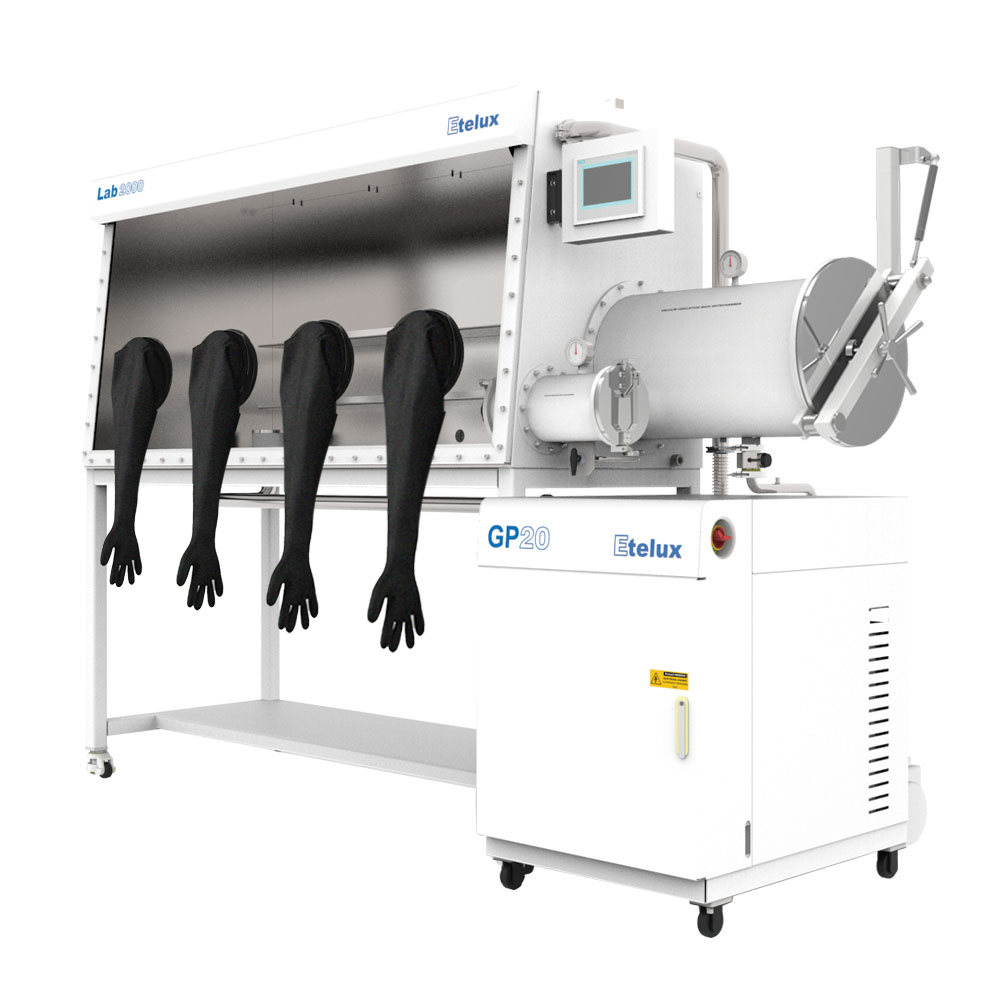
In the field of scientific experiments and materials research, high-vacuum glove boxes are core equipment for handling air-sensitive materials. One of their key performance indicators—vacuum level—directly determines the purity of the atmosphere inside the box and the reliability of experiments. However, many users tend to understand “vacuum level” merely as a single numerical value on a specification sheet, overlooking the underlying classification logic and practical significance.
1. Basic Concepts of Vacuum
Vacuum refers to the degree of rarefaction of gas in a given space, typically expressed as absolute pressure. The smaller the value, the higher the vacuum level and the fewer gas molecules present. In the glove box industry, since operating pressures are often below atmospheric pressure, negative pressure or ultimate vacuum is commonly used to describe performance.
Two common annotation methods are:
Absolute pressure: e.g., “0.67 mbar,” “1.59E-2 Torr”
Relative negative pressure: e.g., “-0.1 MPa”
In practical applications, “ultimate vacuum” generally refers to the lowest pressure that the equipment can achieve under ideal conditions, serving as a critical indicator of sealing performance and pumping capacity.
2. Classification of Vacuum Levels for Glove Boxes
Based on mainstream equipment specifications and real-world application scenarios, the vacuum levels of high-vacuum glove boxes can be roughly divided into the following three tiers:
2.1 Working Vacuum – Routine Operation Level
Typical value: -0.1 MPa to -0.08 MPa, relative pressure
Application scenario: This level represents the standard operating condition for the vast majority of vacuum glove boxes. At this stage, the chamber has removed most of the air, i.e., oxygen and water vapor, via a mechanical pump, and is then filled with inert gases such as argon or nitrogen for atmosphere replacement.
Purpose: Suitable for material encapsulation, battery electrolyte filling, general chemical synthesis, and other experiments that do not require extremely stringent control of oxygen and moisture, such as at the hundreds of PPM level.
2.2 Ultimate Vacuum – Performance Indicator Level
Typical value: Absolute pressure below 1 Torr, approximately 0.133 kPa, or even as low as 6×10⁻² Torr; or relative pressure approaching -0.1 MPa.
Precautions: A higher vacuum level is not always better. Although many stainless steel glove boxes can withstand high vacuum, they are primarily designed for inert atmosphere protection rather than ultra-high vacuum environments. Prolonged maintenance of ultimate vacuum may cause deformation of the chamber due to excessive stress, particularly at the viewing windows or glove ports.
Purpose: Typically used for rapid evacuation of the ante-chamber or load lock to minimize the introduction of contaminants into the main chamber, rather than as a continuous operating state for the main chamber.
2.3 Leak Check Vacuum – Seal Verification Level
Typical value: After reaching ultimate vacuum, close the valves and hold the pressure for more than 12 hours to monitor pressure rise.
Evaluation criteria: The longer the pressure hold time and the slower the pressure rise, the better the sealing performance of the chamber. For example, some equipment can maintain pressure for over 20 hours. Leak rate is a critical metric for assessing the long-term stability of a glove box, generally required to be below a certain threshold, such as less than 6 Torr/h.
3. Relationship Between Vacuum Level and Glove Box Selection
When selecting a glove box, the following points should be considered in light of vacuum level requirements:
Distinguish between the main chamber and the ante-chamber: Most glove boxes can achieve a vacuum level of -0.1 MPa in the ante-chamber, i.e., the load lock. However, the main chamber is subject to glove deformation pressure and is not recommended for frequent high-vacuum evacuation.
Pay attention to material and construction: A 304 stainless steel chamber with reinforced rib design provides the fundamental assurance for high-vacuum tolerance.
Supporting equipment: Achieving high vacuum requires a properly matched vacuum pump. For deep removal of oxygen and moisture to below 1 ppm, a circulation purification system is also needed, rather than relying solely on vacuum pumping.