
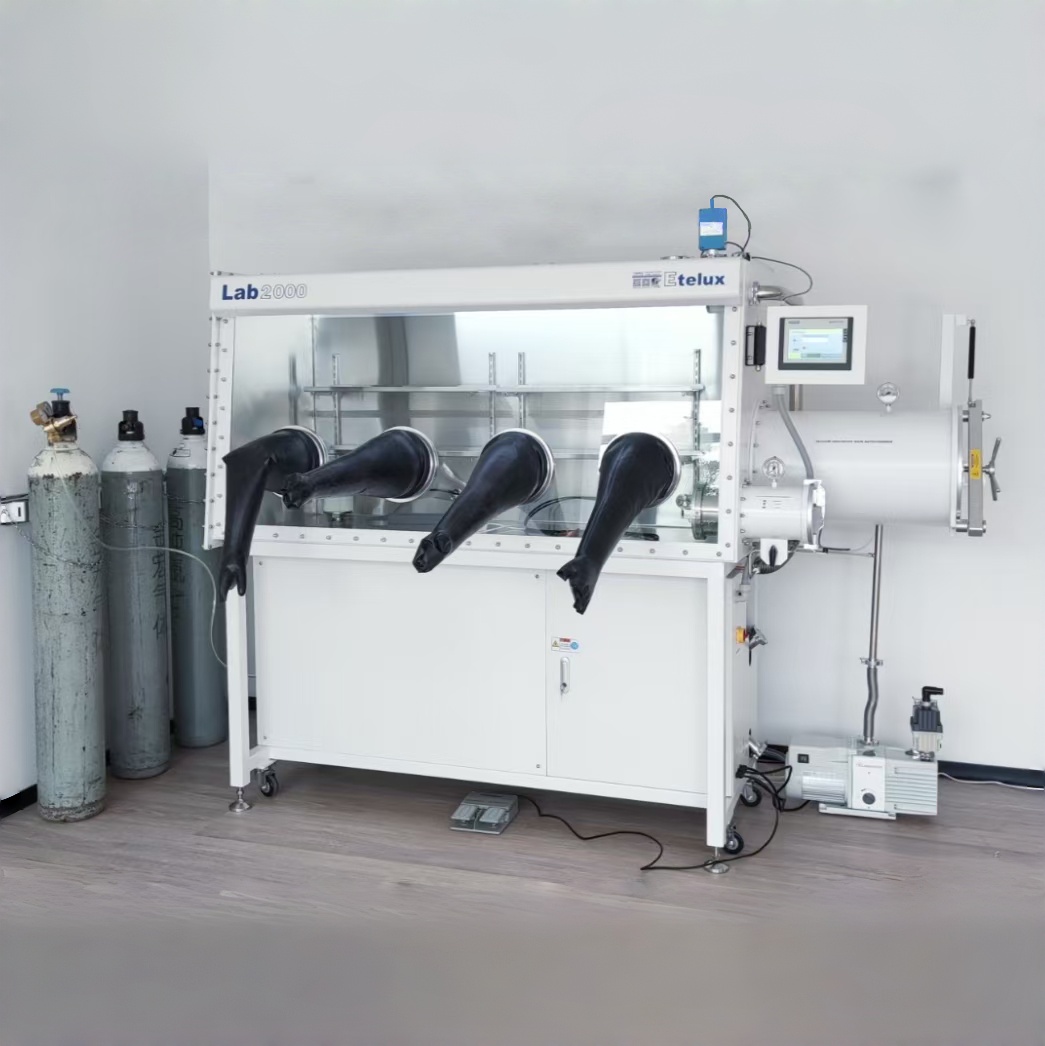
In scientific research, precision manufacturing and special material handling, glove boxes serve as core equipment to isolate air and maintain inert or clean environments. Stainless steel and acrylic are the two most common materials. They differ greatly in durability, visibility, air tightness, chemical resistance and cost. Improper selection may lead to experiment failure, short equipment lifespan and unnecessary budget waste. This guide compares their core features, applicable scenarios and key specifications to help you make the ideal choice.
1. Core Differences in Five Aspects
Material & Structure
- Stainless Steel Glove Box: Made of 304/316L stainless steel with welded and flange sealing structure. Solid enough to withstand vacuum and positive pressure cycles, free of deformation during long-term operation.
- Acrylic Glove Box: Constructed with spliced PMMA panels and adhesive sealing. Lightweight, easy to disassemble and move, but limited pressure and temperature resistance.
Visibility
- Stainless Steel: Only equipped with tempered glass windows on the front side. Limited viewing area with blind spots, not ideal for optical observation and shooting.
- Acrylic: Light transmittance over 90% with full panoramic view. No observation dead angles, perfect for crystal growth, color reaction monitoring, in-situ microscopic inspection and teaching demonstration.
Durability & Environmental Adaptability
- Stainless Steel: Resistant to high temperature, high humidity, impact and vibration. Suitable for harsh workshops. Good tolerance to acid, alkali and most organic solvents, easy to clean and disinfect. Service life exceeds 10 years.
- Acrylic: Prone to deformation above 60℃ and fogging in humid conditions. Vulnerable to scratches and chemical corrosion by acetone and alcohol. Only applicable for stable room-temperature dry laboratory environments.
Air Tightness & Atmosphere Control
- Stainless Steel: Reliable flange sealing keeps water and oxygen content below 1ppm steadily. Well-matched with semiconductor, lithium battery and OLED high-precision production.
- Acrylic: Bonded joints tend to age and leak air. Only maintains 400-1000ppm water and oxygen level after gas replacement, not qualified for ultra-high purity atmosphere experiments.
Cost & Maintenance
- Stainless Steel: 2 to 3 times higher price, heavy weight and fixed installation required. Low daily maintenance frequency with strong dirt and corrosion resistance.
- Acrylic: Cost-effective desktop design for direct placement. Need careful protection against scratches and solvents. Sealing strips require replacement every 1 to 2 years.
2. Suitable Application Scenarios
Choose Stainless Steel Glove Box
- Precision new material research: Lithium battery electrode production, semiconductor packaging, perovskite cell manufacturing
- Severe chemical experiments: Strong acid, alkali and corrosive gas reaction processing
- Industrial continuous operation: Active metal powder handling, anaerobic culture, regular disinfection work
- High temperature and vibration working sites with heavy auxiliary equipment installed
Choose Acrylic Glove Box
- University teaching and basic laboratory research
- Short-term projects and small-scale R&D with limited budget
- Experiments requiring full visual observation and video recording
- Light-duty portable use and space-restricted desktop isolation work
3. Key Specification Comparison
表格
| Parameter | Stainless Steel Glove Box | Acrylic Glove Box |
|---|---|---|
| Working Temperature | -20℃ ~ 120℃ | 0℃ ~ 60℃ |
| Ultimate Vacuum | -0.1MPa, vacuum available | Gas replacement only, no vacuum |
| Water & Oxygen Level | Below 1ppm | 400-1000ppm |
| Light Transmittance | Around 80% | Above 90% |
| Chemical Resistance | Excellent | Poor |
| Weight | Heavy, about 150kg per station | Light, about 30kg per station |
| Price Range | $5,000-$20,000 | $1,500-$5,000 |
4. Final Selection Tips
- Experiment standard: Pick stainless steel for strict low water-oxygen, corrosive and high-temperature experiments. Choose acrylic for simple isolation and visual priority tests.
- Budget and service period: Stainless steel is cost-effective for long-term use; acrylic fits temporary projects with limited funds.
- Operation demand: Select stainless steel for vacuum extraction and heavy equipment matching; choose acrylic for panoramic viewing and frequent moving.
5. Summary
Stainless steel glove boxes feature solid construction, superior sealing performance and outstanding chemical & temperature resistance, acting as reliable industrial-grade equipment for sophisticated experiments. Acrylic glove boxes stand out with high transparency, low cost and flexible mobility, becoming a cost-efficient option for basic research and teaching.
General selection rule: Stainless steel for harsh industrial and high-precision scenarios, acrylic for visual observation and budget-friendly laboratory use.