
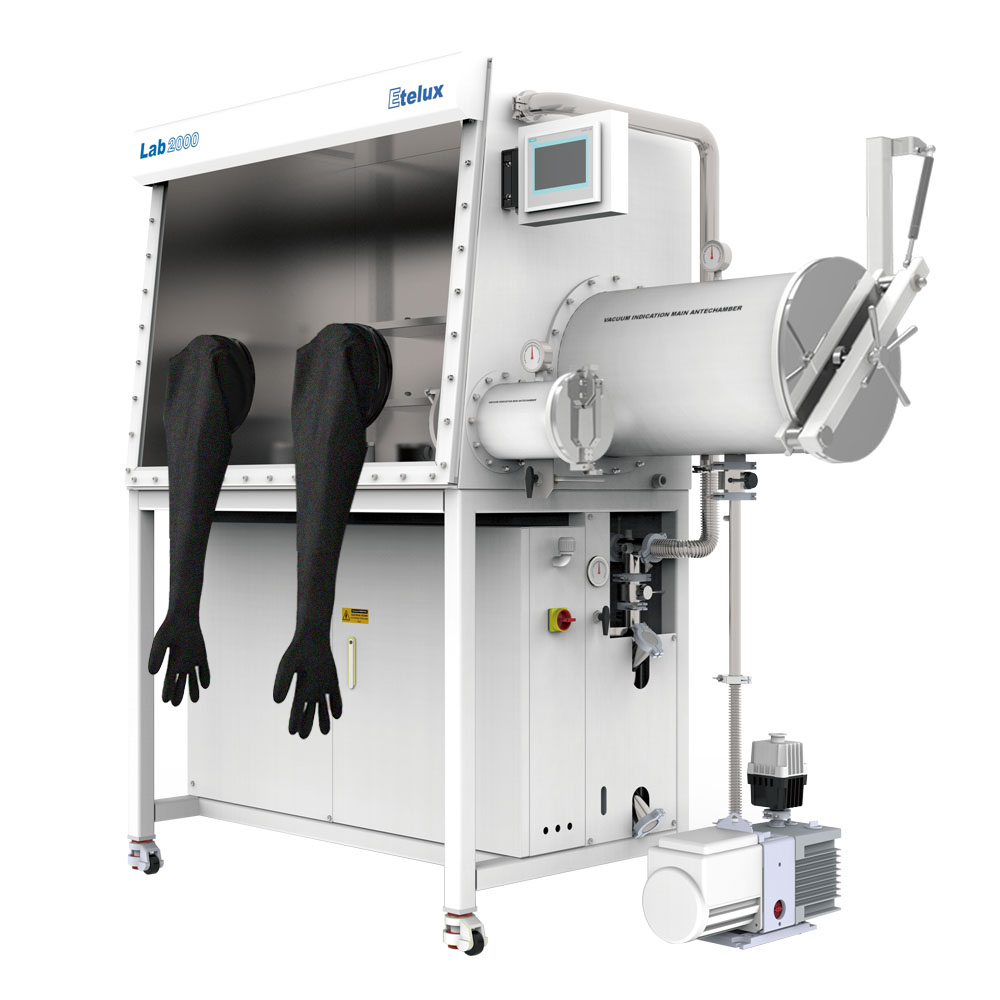
For laboratories handling moisture and oxygen-sensitive materials such as lithium battery components, semiconductor chips, perovskite compounds, and specialty chemicals, a stable inert atmosphere is non-negotiable. The purification system defines the core performance of any recirculating glove box, directly influencing experimental consistency, sample yield, daily uptime, and long-term operational expenses. Many entry-level glove boxes rely on single-column purification to cut initial costs, but this basic configuration creates obvious bottlenecks in continuous operation, precision control, and on-site management. As advanced R&D and small-scale manufacturing demand longer running hours, dual column purification has become a necessary upgrade to maximize glove box working efficiency.
Single-column purification operates with one adsorption tower to remove residual oxygen and moisture inside the closed loop. After a period of saturation, the adsorbent material needs heating, vacuuming and gas purging for regeneration. The biggest limitation is mandatory full-system shutdown during this process. All internal operations must stop, samples need temporary protection, and the internal atmosphere breaks balance. Frequent shutdown and restart cause repeated fluctuations in dew point and oxygen concentration, accelerate glove wear, increase inert gas consumption, and generate inconsistent experimental data. For labs running 8–12 hours daily or even 24/7, intermittent downtime becomes a major efficiency barrier and hidden cost.
Dual column purification solves this pain point through a dual-tower alternating cycle design. Two independent purification columns work separately under automatic PLC control: one column runs continuously for online adsorption to capture water and oxygen molecules, while the other executes closed-loop regeneration in the background. Intelligent valve switching realizes seamless transition between adsorption and regeneration modes, requiring no manual operation and zero production downtime. The glove box maintains a fully sealed circulating state throughout the whole process, eliminating atmosphere collapse and repeated gas replacement. This design fundamentally improves equipment availability and unlocks long-term continuous operation capability.
In terms of atmosphere control accuracy, dual column configuration delivers far more stable parameters than single-column setups. Single-tower systems gradually decline in purification capacity before regeneration, leading to slow O₂ and H₂O rebound. Dual-column alternating work keeps purification load balanced at all times, sustaining ultra-stable internal conditions stably below 0.1 ppm, compared with the common 1 ppm limit of standard glove boxes. Constant low moisture and low oxygen levels reduce sample oxidation, avoid batch failure, and greatly improve data repeatability — a critical advantage for material development, formula testing and electronic packaging processes.
Beyond stable atmosphere, dual column purification optimizes overall operational and maintenance efficiency. Modular column structure allows independent inspection and partial maintenance without stopping the whole device. Real-time pressure monitoring, saturation judgment and fault self-check functions help engineers arrange maintenance in advance, avoiding sudden shutdown failures. Steady circulation also reduces frequent gas supply and leakage compensation, lowering long-term consumption of nitrogen or argon. For industrial laboratories and multi-station working environments, this translates into lower labor costs and fewer unexpected production interruptions.
Additionally, dual column purification features strong compatibility for customized glove box projects. It can be flexibly matched with vacuum transition chambers, double-sided operation cabins, anti-corrosion internal treatments and multi-functional expansion modules. Whether for university research labs, pilot production lines or new energy material factories, this purification solution adapts to complex process requirements, making it a scalable long-term investment instead of a temporary entry-level option.
Final Thought
The gap between single-column and dual-column purification is not only reflected in structural differences, but in overall operational efficiency and long-term stability. Dual column design removes regeneration downtime, maintains ultra-low water-oxygen environment, simplifies daily maintenance, and adapts to high-intensity laboratory work.
When sourcing a high-performance glove box, focusing on core purification architecture is more important than superficial specifications. Upgrading to dual column purification ensures your inert environment always matches the strict requirements of advanced materials research and precision manufacturing.