
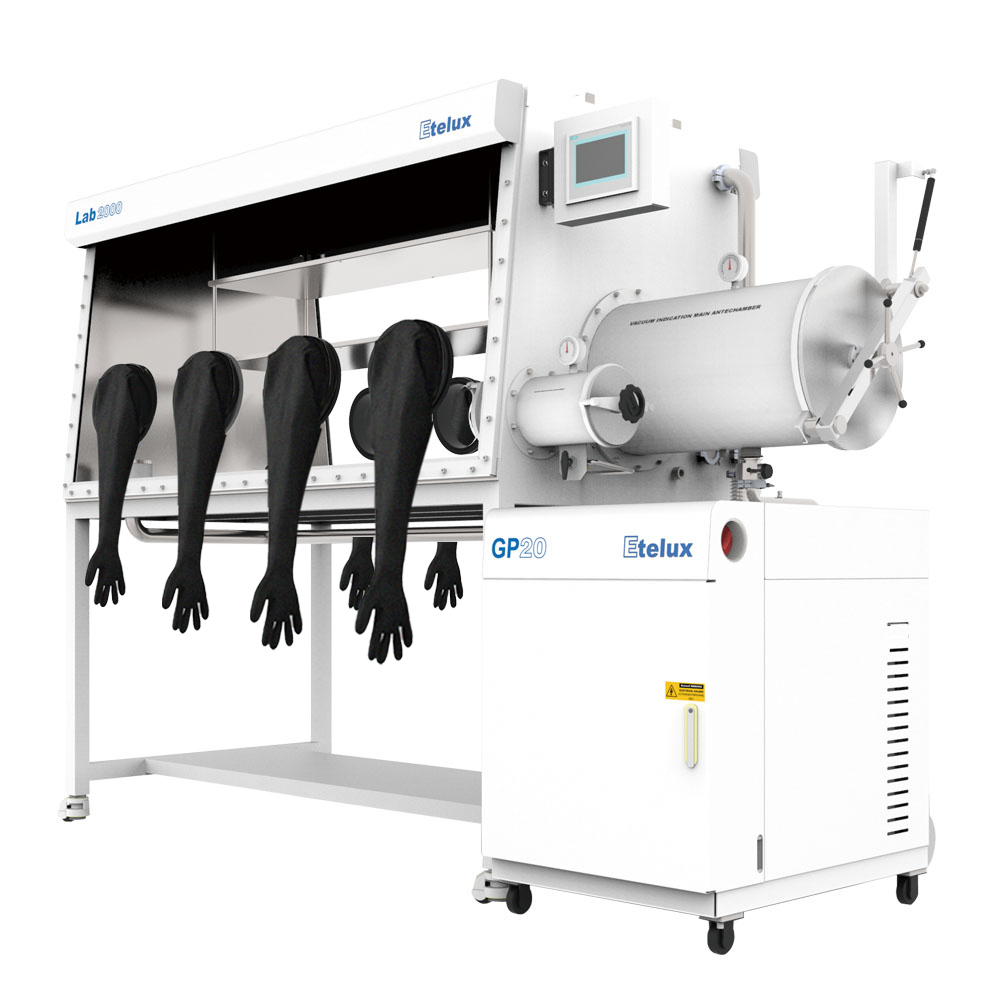
As a precision piece of laboratory equipment highly sensitive to moisture and oxygen, the performance stability of a glovebox directly affects the reliability of experimental results. Many users only realize the importance of maintenance when water and oxygen levels spike, but true maintenance lies in daily habits. This article will systematically outline the complete maintenance steps for gloveboxes, from daily must-dos to shutdown procedures during long holidays, helping you keep your equipment in optimal condition for the long term.
I. Daily Must-Do Inspection Items
Taking a few minutes before and after each day’s experiments to do the following will help you avoid most unexpected failures.
1. Clean Internal and External Surfaces
Before and after each day’s experiments, use a clean lint-free cloth to wipe the external and internal surfaces of the glovebox to remove dust and stains. For stubborn stains, mild cleaning agents may be used, but ensure no residue remains after wiping, as residual chemicals could evaporate and affect the clean environment inside the box.
2. Inspect Glove Integrity
Before each use, carefully inspect the gloves for damage, cracks, or signs of aging, paying special attention to the fingertip areas, which are the most prone to wear. If any issues are found, the gloves should be replaced promptly. Patching gloves is strictly prohibited. It is recommended to wear an additional pair of disposable gloves inside the glovebox gloves during operations, following the three-layer glove principle to maximize protection of the glovebox gloves.
3. Record Key Operating Data
Daily, carefully record the glovebox’s water and oxygen levels as well as gas consumption to prevent equipment shutdown due to insufficient gas pressure. Also check the working gas cylinder capacity to ensure adequate supply.
4. Maintain Positive Pressure
Ensure the glovebox maintains a positive pressure at all times, typically between 50-100 Pa. Monitor pressure in real time through pressure sensors and the control system. When pressure drops below the set value, replenish with purified gas in a timely manner to prevent outside contaminated air from entering.
II. Weekly and Monthly Basic Maintenance
Weekly maintenance:
- Check the vacuum pump oil level and top up promptly if the oil level is below two-thirds of the full mark
- Clean the circulation fan filter screen to ensure proper ventilation
Monthly maintenance:
- Deep cleaning: Perform a deep cleaning every 1-2 months. Open all removable components of the glovebox and use specialized cleaning tools and agents to thoroughly clean all internal corners, pipes, fans, and other parts. After cleaning, use clean nitrogen or argon to blow dry and prevent moisture residue
- Clean the water analyzer: Perform this every 3 months to ensure detection accuracy. The actual frequency should also be adjusted based on the specific environment inside the box
III. Quarterly and Annual Critical Maintenance
Every 3-6 months:
- Replace the HEPA filter. When replacing, ensure the filter model and specifications match the glovebox and that the installation seal is secure
- Test the glovebox’s various performance indicators, such as particle count, humidity, and oxygen content. If any indicators exceed limits, timely adjustments and maintenance are required
- If organic solvents are frequently used, replace the organic solvent adsorption material regularly
Every six months:
- Replace the vacuum pump oil. If the pump oil appears black, yellow, or brownish, it should be replaced immediately. It is recommended to change the pump oil after purification column regeneration
Annually:
- Calibrate all sensors inside the box, including water/oxygen analyzers and pressure sensors. Calibration should be performed by professionals using standard calibration equipment
- Test the box’s sealing integrity using a leak detector to check for gas leaks
IV. Special Maintenance Before and After Long Holidays
Long holidays are a peak period for glovebox failures, making preparation before and after the break especially critical.
Before the holiday:
- Replace with a full working gas cylinder: Before the holiday, perform a pressure hold leak test on the glovebox and working gas lines. If any leaks exist, address them in advance to prevent insufficient working gas during the holiday
- Apply negative pressure to both large and small transfer chambers: Prevent air leaks caused by improperly sealed chamber doors
- Seal solvents: Seal any open solvent containers inside the glovebox to prevent solvent volatilization from affecting performance
- Seal and store valuable samples: Store valuable reactive metals in sealed containers to prevent damage from rising water and oxygen levels if circulation stops due to insufficient working gas
- Check vacuum pump oil: Replace it in advance if it appears contaminated
- Turn off analyzers: Turn off analyzers when the glovebox is unmanned during the holiday, and restart them after the holiday ends
- Keep main power on: Keep the main power switch to the glovebox energized, but power off and shut off gas to all other electrical and gas equipment connected inside or outside the box
Pressure setting adjustment: When the laboratory temperature is stable, set the box pressure to upper limit 4 and lower limit 1. When temperature differences are significant, set it to upper limit 5 and lower limit 1 to prevent pressure fluctuations due to thermal expansion and contraction.
After the holiday:
Upon returning to work, conduct a comprehensive inspection of the glovebox: clean the box, check sealing performance, especially at glove-to-box connections and chamber door sealing gaskets, inspect key components such as the vacuum pump, circulation fan, and filters, and calibrate detection equipment such as water/oxygen analyzers.
V. Precautions for Cleaning and Disinfection
There are several common pitfalls in the cleaning and disinfection process that require special attention:
- Do not use chlorine-containing disinfectants such as bleach or acetone, as they can corrode seals or generate toxic gases
- Avoid liquid seeping into the circulation lines during cleaning to prevent moisture damage to molecular sieves or activated carbon
- UV disinfection should not be performed too frequently: frequent UV exposure accelerates glove aging. It is recommended to limit UV disinfection to no more than 3 times per week
For deeper disinfection needs, vaporized hydrogen peroxide (VHP) methods can be employed. Inject 35% hydrogen peroxide solution to maintain a concentration of 0.2-0.5 mg/L for 1 hour, then test for residual levels ≤1 ppm after decomposition.
Conclusion
Glovebox maintenance is not a one-time effort but a habit integrated into daily routines. By incorporating the above steps into your laboratory’s daily operating procedures and establishing a standardized SOP, your glovebox will operate stably over the long term, providing a reliable environmental safeguard for your experiments.
Related Reading:
Metal Powder Metallurgy Oxidation-Proof Glove Box: A Practical Guide
Standard Glovebox Configuration Solutions for Research and University Laboratories