
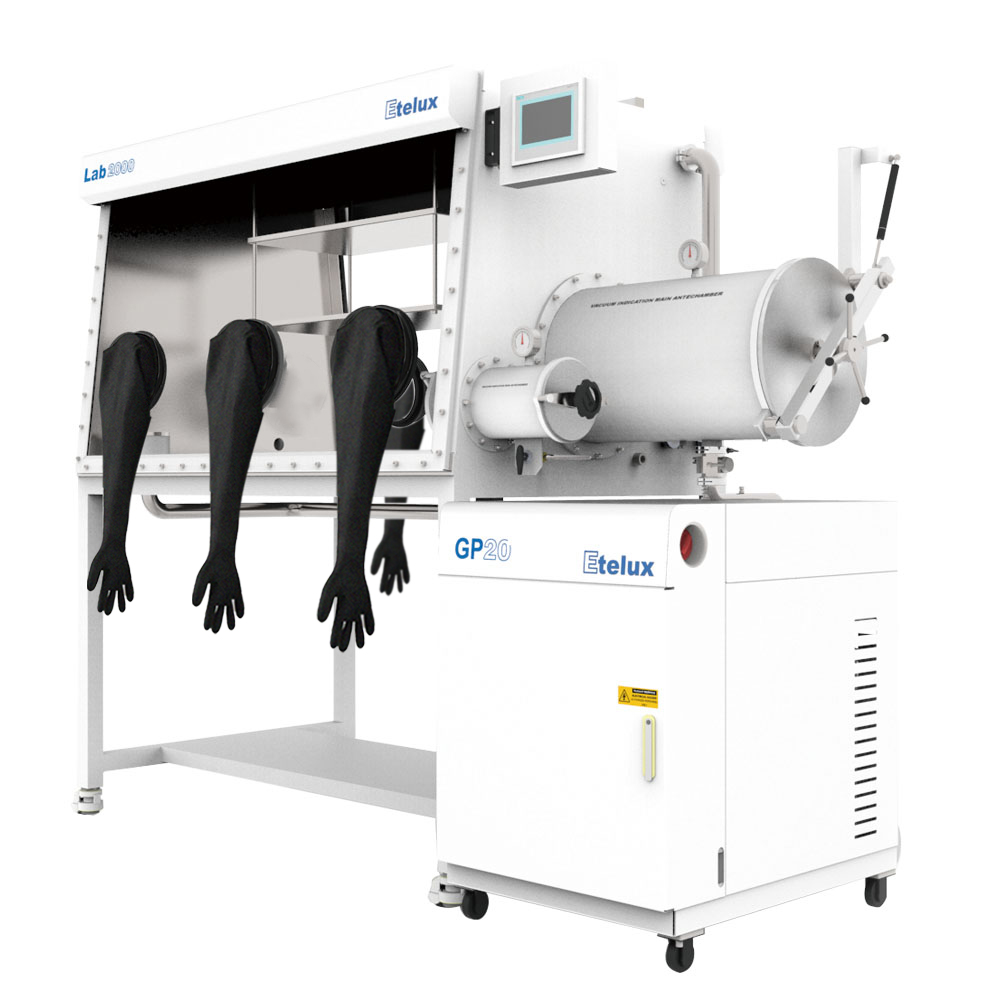
In the daily operation of glove boxes, gas consumption is a continuous and significant cost. Whether it is working gas or regeneration gas, the cumulative expense over time is considerable. Many users assume that gas consumption is a “fixed cost” that cannot be optimized. However, through reasonable operating habits and maintenance strategies, substantial energy and gas savings can be achieved. This article will provide practical gas-saving tips for glove boxes from three dimensions: daily operations, equipment settings, and maintenance.
I. Energy-Saving Tips for Daily Operations
1. Plan Experiment Batches to Reduce Transfer Chamber Pump-Purge Cycles
The process of evacuating and refilling the transfer chamber is the largest gas-consuming operation of a glove box. Each time items are placed into the transfer chamber, a “vacuum-purge” cycle is required, which consumes a significant amount of working gas.
Recommended approach: Before starting your experiments, place all items you will need for the day into the transfer chamber at once and perform the pump-purge operation collectively, rather than operating the transfer chamber every time you need a single item. This can reduce what might have been ten or more pump-purge cycles to just two or three, dramatically cutting gas consumption.
2. Make Good Use of the Small Transfer Chamber and Heating Function
If your equipment is equipped with a small transfer chamber, prioritize using it for transferring small items. The smaller volume consumes far less gas per pump-purge cycle than the large transfer chamber. For items that require rapid drying, if the chamber has a heating function, you can heat the items first to remove surface-adsorbed moisture before vacuum purging, which may reduce the number of pump-purge cycles needed.
3. Avoid Leaving Doors and Ports Open for Extended Periods
This is the most basic and most easily overlooked issue. Every time you open the glove box door or operating ports, a large amount of inert gas escapes, and the chamber’s moisture and oxygen levels rise accordingly, requiring prolonged circulation system operation to return to normal levels. During the recovery process, the purifier column’s adsorption load also increases significantly, indirectly shortening the service life of the purification material.
Recommended approach: Close the transfer chamber door immediately after placing items inside; remove your hands from the ports promptly when not operating to minimize the time the glove ports remain open.
4. Minimize Unnecessary Chamber Purging
The “purge” function uses working gas to directly displace the atmosphere inside the chamber, consuming far more gas than normal circulation. Only perform purging when the chamber is heavily contaminated—such as when moisture and oxygen levels have risen sharply or when volatile substances have been introduced. Under normal conditions, rely on the circulation system to maintain the required levels; there is no need to use the purge function frequently.
II. Energy-Saving Tips for Equipment Settings
1. Set the Pressure Range Properly
Many users tend to set the chamber pressure either too high or too low, both of which increase gas consumption. Excessively high pressure causes gas to leak微量ly through seals, while excessively low pressure may cause seal failure due to external atmospheric pressure differentials.
Recommended approach: Set the working pressure within the equipment’s recommended range, typically at a positive pressure of 0 to 5 mbar. For glove boxes that run continuously for extended periods, you may moderately widen the upper and lower pressure limits to reduce frequent gas replenishment caused by pressure fluctuations, thereby reducing working gas consumption.
2. Adjust the Circulation Blower Speed Properly
Some glove box models allow adjustment of the circulation blower speed. During idle periods or between experiments, you can reduce the blower speed to lower circulation frequency, saving electricity while also reducing gas disturbance-related losses. Of course, during active experiments, normal circulation speed should be maintained to ensure stable moisture and oxygen levels inside the chamber.
3. Strategic Choice Between Argon and Nitrogen
There is a notable price difference between argon and nitrogen, with nitrogen generally being more cost-effective. If your experiments do not have exceptionally strict purity requirements and the materials do not react with nitrogen, you may consider using nitrogen as the working gas. For experiments involving lithium metal anodes that do react with nitrogen, argon is mandatory. By reasonably assessing experimental requirements and choosing the more cost-effective gas type, long-term operating costs can be significantly reduced.
III. Energy-Saving Tips for Maintenance
1. Regular Leak Checks
Leakage is the single largest hidden consumer of glove box gas. A tiny leak point can unknowingly double your working gas consumption.
Recommended approach: Perform a pressure-hold leak test at least once every quarter. If you notice abnormal pressure drop rates, promptly identify the leak source—pay special attention to glove damage, aging transfer chamber seals, and loose valve connections. Timely leak repair not only saves gas but also reduces the load on the purification system.
2. Time Purifier Column Regeneration Wisely
Purifier column regeneration consumes regeneration gas (a mixture of hydrogen and working gas) as well as electricity. Regenerating too frequently wastes energy, while delayed regeneration reduces purification efficiency, making it difficult to maintain chamber moisture and oxygen levels.
Recommended approach: Monitor trends in moisture and oxygen analyzer readings. When values rise slowly and cannot be brought back down to normal levels even after extended circulation, the purifier column is approaching saturation and requires regeneration. If your equipment is equipped with a dual-purifier-column system, you can alternate between use and regeneration, avoiding the interruption of experiments during regeneration that single-column systems require.
3. Check Vacuum Pump Oil Condition
If vacuum pump oil is not changed regularly, degraded oil quality will impair pump efficiency, leading to longer evacuation times and indirectly increasing gas consumption. Regularly check the oil color and level, and replace contaminated oil promptly to keep the vacuum pump in optimal working condition.
IV. Should You Turn Off the Circulation System to Save Energy?
This is a question many users ask, especially around holidays. Here is a clear recommendation:
It is not advisable to frequently shut down the circulation system. The most gas-intensive phase of glove box operation is not normal running, but rather the restart after each shutdown—chamber moisture and oxygen levels must be re-established, and the purifier column must be re-activated, consuming far more working and regeneration gas than the cost of maintaining continuous operation. If the equipment will be idle for no more than one to two weeks, it is recommended to keep the circulation system running—it saves both gas and hassle.
If long-term shutdown is truly necessary, please refer to the previous article “Precautions for Long-Term Shutdown and Storage of Glove Boxes” and follow the proper shutdown procedures.
V. Recommended Energy-Saving Checklist for You
Below is a daily operation checklist you can print and post in your laboratory:
- □ Transfer experimental materials in batches to reduce the number of transfer chamber pump-purge cycles
- □ Close the transfer chamber door immediately after placing items inside
- □ Remove your hands from the operating ports promptly when not in use
- □ Prioritize using the small transfer chamber for small items
- □ Record gas consumption monthly and investigate promptly if abnormalities are found
- □ Perform a leak check every quarter
- □ Regularly inspect gloves for damage and seals for aging
- □ Monitor purifier column regeneration timing—neither too early nor too late
- □ Avoid frequent starting and stopping of the circulation system
In conclusion, glove box gas consumption is not a fixed cost set in stone. Through proper experimental planning, correct equipment settings, and regular maintenance, significant energy savings can be achieved—reducing laboratory operating costs while extending the service life of core components. Energy saving is not achieved overnight, but is reflected in every detail of daily operation.
If you have any questions about glove box energy-saving usage or daily maintenance, please feel free to contact us. Etelux has been dedicated to the glove box industry for many years and has accumulated extensive application experience. We look forward to providing you with professional support.