
In the fields of chemical synthesis and materials research, handling air-sensitive substances is a daily challenge. When it comes to excluding water and oxygen, two major laboratory tools—the glovebox and the Schlenk line—are often compared side by side. Some say the glovebox is the ultimate solution, while others believe that mastering Schlenk techniques is sufficient for most scenarios. This article sets aside bias and examines the pros and cons of both from a practical perspective, helping you determine which tool better suits your experimental needs.
1. What Is a Schlenk Line
A Schlenk line is a glass apparatus system that switches between inert gas and vacuum. Its core structure consists of dual glass tubes: one connected to an inert gas source such as nitrogen or argon, and the other connected to a vacuum pump. Through special double-oblique stopcocks, researchers can flexibly switch between vacuum evacuation and inert gas backfilling, creating an anhydrous and oxygen-free environment for reactions.
On a Schlenk line, routine operations such as reflux, distillation, filtration, and even liquid transfers can all be performed under inert gas protection. It functions like a precision gas path switch, equipping conventional glassware with the capability to handle air-sensitive reagents.
2. What Is a Glovebox
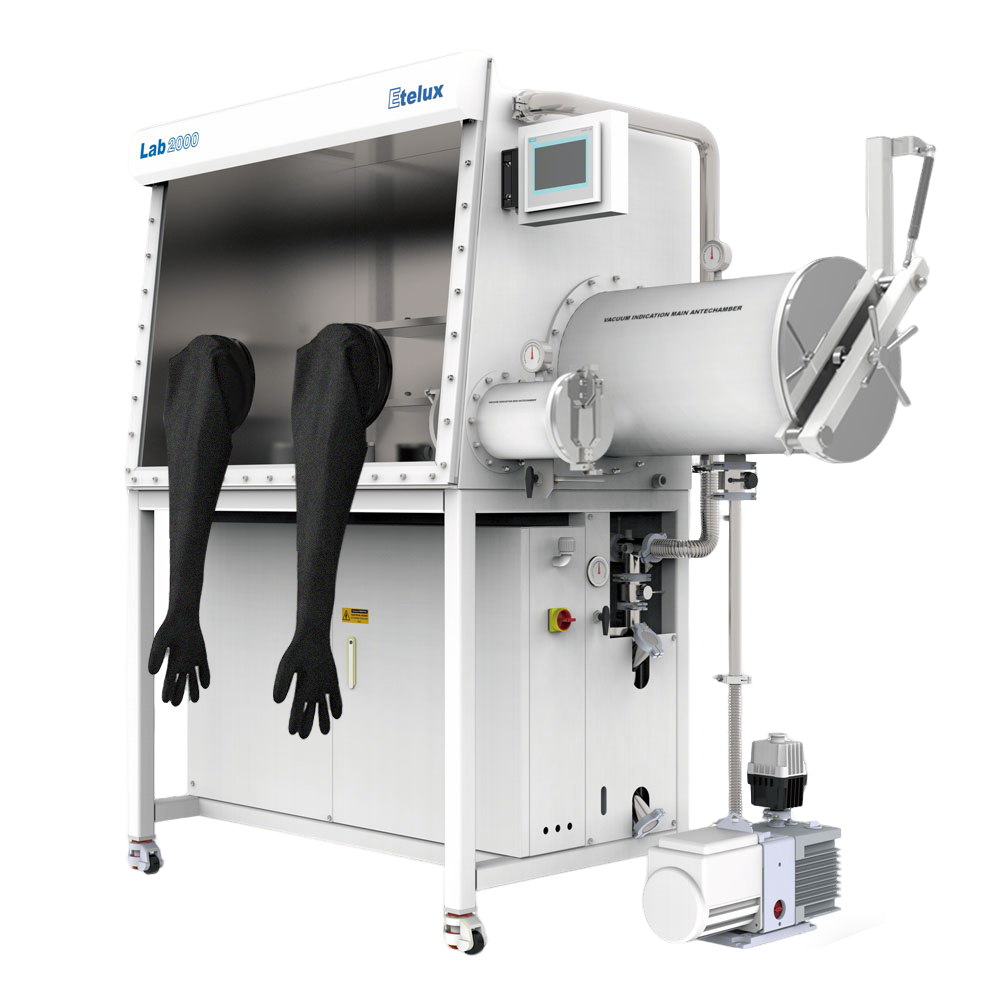
A glovebox is a sealed working chamber that provides physical isolation through a transparent panel and built-in gloves. Based on materials and functions, it can be roughly divided into three categories.
The first is the basic acrylic glovebox, suitable for routine reagent weighing and basic dust protection. The second is the stainless steel vacuum glovebox, which replaces the chamber atmosphere through repeated vacuum evacuation and inert gas purging. The third is the recirculating purification glovebox, equipped with a gas purification system that can actively maintain oxygen and moisture levels below 1 ppm over extended periods.
A glovebox is essentially an independent workstation. Researchers can complete weighing, grinding, battery assembly, sample transfer, and other complex operations inside the chamber without worrying about contamination from ambient air.
3. Core Comparison of Advantages and Disadvantages
Advantages and Disadvantages of the Schlenk Line
Key Advantages:
First, powerful vacuum and heating synergy. This is an irreplaceable advantage of the Schlenk line. During operation, researchers can apply vacuum while simultaneously heating glassware with a heat gun, removing trace moisture adsorbed on the vessel walls in situ. This combination of simultaneous evacuation and heating achieves exceptionally high drying efficiency.
Second, low cost and high flexibility. The Schlenk line itself is not expensive and is compatible with nearly all standard ground-glass joints and glassware. No special consumables are required; as long as an inert gas source and a vacuum pump are available, work can proceed.
Third, intuitive operation and skill development. Experienced Schlenk users can instantly assess system status by observing the bubbler and pressure gauge readings. For researchers working in organometallic synthesis such as rare-earth organometallic compounds, a carefully operated Schlenk line can achieve anhydrous and oxygen-free conditions comparable to those of a glovebox.
Notable Disadvantages:
First, heavy reliance on operator skill. Operations such as double-tip needle transfers and syringe injections require extensive practice, and novice error rates are relatively high.
Second, unsuitable for complex manipulations. Weighing solid powders, grinding samples, and assembling precision devices such as coin cells are nearly impossible to perform on a Schlenk line.
Third, limited atmosphere maintenance. It is a pass-through type tool; once the reaction vessel is disconnected from the inert gas supply, any inadequate sealing will quickly lead to contamination.
Advantages and Disadvantages of the Glovebox
Key Advantages:
First, an extremely stable inert environment. High-end recirculating purification gloveboxes can maintain oxygen and moisture levels consistently below 1 ppm—a level unattainable by the Schlenk line. For sensitive materials such as lithium battery materials, perovskite solar cells, and MOF compounds, the glovebox is the only viable choice.
Second, exceptional operational freedom. Balances, stirrers, and hot plates can be placed inside the chamber. Researchers can weigh, grind, and even perform microscopic observations just as they would on a regular lab bench, completely free from air interference.
Third, low labor demand and long-term maintenance. Although the initial investment is high, routine operation mainly consumes electricity, and purification column regeneration cycles typically range from 1 to 3 years. Over the long term, the overall cost is manageable.
Notable Disadvantages:
First, incompatibility with vacuum and heating. This is a critical limitation. A glovebox cannot perform vacuum heating drying of glassware. All items brought into the chamber must be thoroughly pre-dried in an oven or vacuum desiccator; otherwise, trace moisture will continuously contaminate the chamber atmosphere.
Second, material constraints. Acrylic gloveboxes are not pressure-resistant, cannot be evacuated, and are prone to cracking upon contact with organic solvents such as acetone and toluene. Stainless steel chambers, while corrosion-resistant, are costly and opaque.
Third, gas consumption and purge efficiency. Even for vacuum-purging type gloveboxes, reducing oxygen levels to a relatively low level such as several hundred ppm requires consuming large volumes of high-purity inert gas through repeated evacuation and refilling cycles. Recirculating purification systems, meanwhile, demand a very high initial capital investment.
4. Summary Comparison Table
| Feature Dimension | Schlenk Line | Glovebox Represented by Stainless Steel Purification Type |
|---|---|---|
| Water/Oxygen Control Level | Operator-dependent, sufficient for most synthesis needs | Extremely stable, below 1 ppm |
| Vacuum Heating Drying | Inherently compatible, can bake vessels in situ | Not feasible, samples must be pre-dried |
| Solid Weighing and Transfer | Extremely difficult, prone to air exposure | Core strength, like working on a regular bench |
| Precision Operations e.g. Battery Assembly | Not feasible | The only practical choice |
| Operational Learning Curve | Steep, requires dedicated training | Gentle, quick to learn, user-friendly |
| Equipment and Operating Costs | Low, glass consumables | Very high, equipment plus column maintenance |
5. Decision Guide
Prioritize the Schlenk line if:
Your synthesis primarily involves solution-phase organic or inorganic reactions, such as preparation of organometallic reagents or anhydrous oxygen-free reflux. You must perform vacuum heating drying of glassware, which is a hard process requirement. Your budget is limited, or your laboratory already has experienced operators.
Prioritize the glovebox if:
You need to weigh, grind, or transfer air-sensitive solid powders such as catalysts or lithium salts. You need to assemble physical devices such as coin cells or OLED devices. You require a long-term, stable, and reproducible ultra-low water and oxygen environment, and your experimental manipulations are complex and require extensive in-chamber processing.
Closing Remarks
The Schlenk line and the glovebox are not substitutes but complementary tools. In actual research practice, many research groups combine both: using the Schlenk line for precursor synthesis and glassware conditioning, and using the glovebox for sample assembly and storage. For the vast majority of routine synthesis tasks, a Schlenk line equipped with a good vacuum pump and inert gas source is more than sufficient. When your research enters the realm of absolute zero tolerance for water and oxygen, the glovebox becomes the key that unlocks new possibilities.
Is your experimental work primarily solution-phase synthesis or solid sample processing? Feel free to share your selection experience in the comments section.
Related Reading
Glovebox International Standards and Certifications: Are You Choosing the Right Equipment?
Glove Box vs. Vacuum Dryer: Are You Making the Right Choice?