
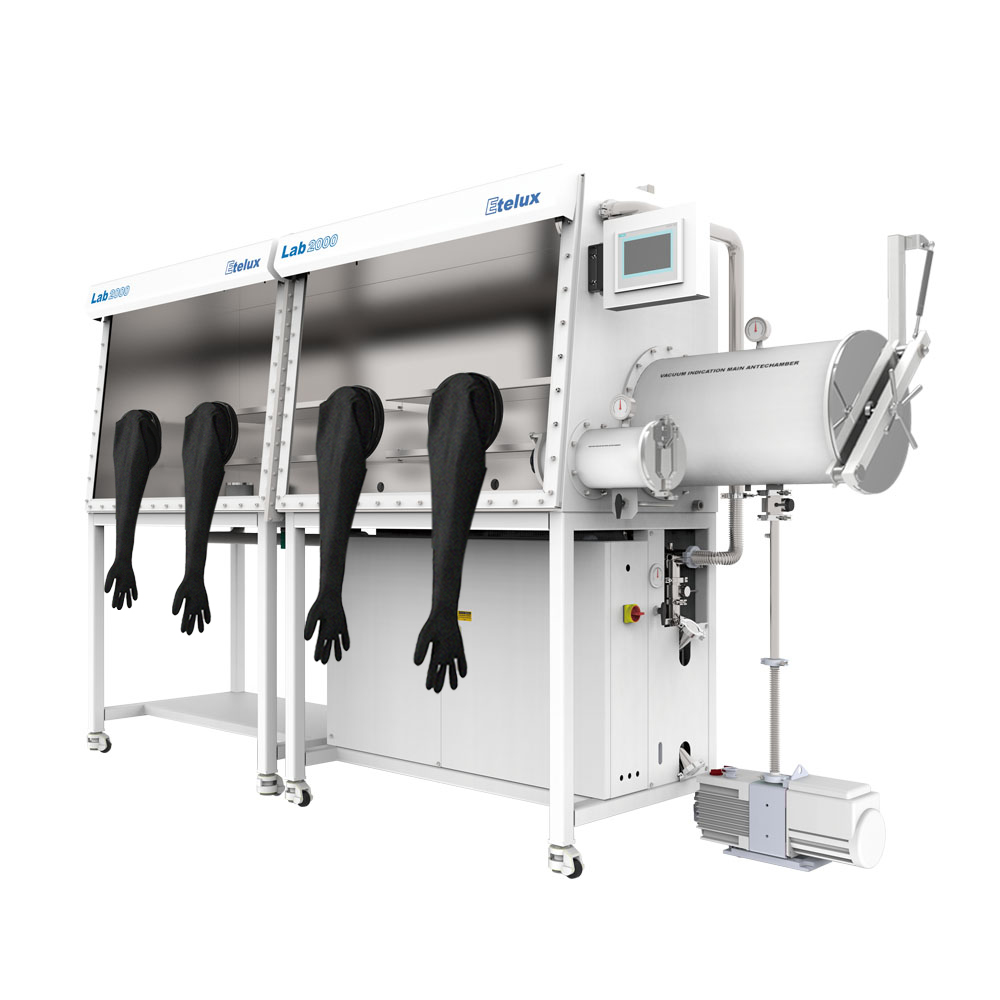
The core mission of a glove box is to create and maintain a stable inert atmosphere within a sealed enclosure, protecting samples that are highly sensitive to oxygen and moisture. Achieving this goal requires high-purity protective gases. The two most commonly used candidates are nitrogen and argon.
Both gases effectively displace the air inside the chamber, but subtle differences in their chemical properties determine their respective areas of expertise. This article will analyze the key considerations for choosing between nitrogen and argon glove boxes, helping you precisely match the gas to your experimental needs.
Core Difference: The Battle of Chemical Inertness
First, a critical point must be clarified: nitrogen is not an absolutely inert gas.
Although nitrogen is stable at room temperature, under certain conditions it can react chemically with some substances. For example, lithium metal reacts with nitrogen at room temperature to form lithium nitride, a reaction that is fatal in lithium battery research because it consumes active materials and introduces impurities. Additionally, active metals such as titanium and magnesium can react with nitrogen at high temperatures to form nitrides.
Argon, on the other hand, is a truly inert gas. As a monatomic molecule with a completely filled outer electron shell, it is chemically extremely stable and will not react with materials inside the chamber under virtually any experimental conditions. Therefore, when you are working with materials that are sensitive to nitrogen, argon is the only choice. The specific comparison is as follows:
| Feature | Nitrogen Glove Box | Argon Glove Box |
|---|---|---|
| Chemical Inertness | Relatively high, but reacts with lithium, titanium, and other active metals | Extremely high, virtually no reactions occur |
| Gas Density | Slightly lighter than air | Approximately 40% heavier than air |
| Core Advantage | Low cost, economical | Absolute inertness, optimal protection |
| Main Limitation | May react with certain materials | High cost, approximately 2 to 3 times that of nitrogen |
Physical Property Differences: The Impact of Density
Beyond chemical properties, physical characteristics also affect the user experience. Argon is denser than air, so it tends to sink inside the chamber, forming a blanket-like protective layer that pushes the lighter air upward and out, theoretically making it more efficient at displacing air. Nitrogen is slightly lighter than air. Of course, for modern glove boxes equipped with circulation purification systems, the gas is continuously recirculated, purified, and mixed evenly, so the impact of this density difference is negligible.
Application Scenarios: How to Make Your Choice?
When to Prioritize Argon
In lithium metal and lithium battery research, such as lithium-metal batteries and lithium-sulfur batteries, argon is mandatory to prevent the formation of lithium nitride. For processing active metals, including titanium, zirconium, magnesium, sodium, potassium, and other metals that react with nitrogen, argon is required. For nitrogen-sensitive catalysts and materials, such as Ziegler-Natta catalysts, certain organometallic compounds, OLEDs, quantum dots, and other materials with extremely high purity requirements, argon is preferable. When you need to eliminate all potential reaction variables and pursue the highest level of experimental certainty, argon is the better choice.
When to Prioritize Nitrogen
For routine material protection, the majority of oxygen- and moisture-sensitive materials that do not themselves react with nitrogen, such as lithium iron phosphate, lithium cobalt oxide, graphite, and common metal powders like iron, copper, and aluminum, are well suited for nitrogen. For general chemical synthesis and processing, including organic synthesis, semiconductor packaging, pharmaceutical R&D, and most other application scenarios, nitrogen works perfectly. For cost-sensitive or high-frequency usage scenarios, nitrogen’s price advantage is significant. For operations that require frequent daily purging and have high gas consumption, choosing nitrogen can significantly reduce long-term operating costs.
Purity and Operating Costs
Regardless of which gas you choose, purity is the lifeline. Glove boxes typically target water and oxygen levels below 1 ppm, which directly requires the gas source to have a purity of at least 99.999%. Using a lower-purity gas source will overload the purification system, requiring frequent regeneration, which in turn causes operating costs to skyrocket.
In terms of cost, a standard 40L cylinder of high-purity nitrogen costs approximately 200 to 300 RMB, while the same规格 of high-purity argon costs around 500 to 800 RMB. All things considered, nitrogen is undoubtedly the more cost-effective choice when it meets the experimental requirements.
Summary
The key to choosing between nitrogen and argon lies in evaluating whether your experimental materials are incompatible with nitrogen.
For the vast majority of routine experiments, high-purity nitrogen is the ideal choice that balances performance and cost. However, when your experiment involves active metals such as lithium or titanium, or any research that could be contaminated by nitrogen, selecting high-purity argon is a necessary condition for ensuring experimental success. If you are still unsure, the best approach is to consult authoritative literature in your field to see what atmosphere fellow researchers use in similar experiments.