
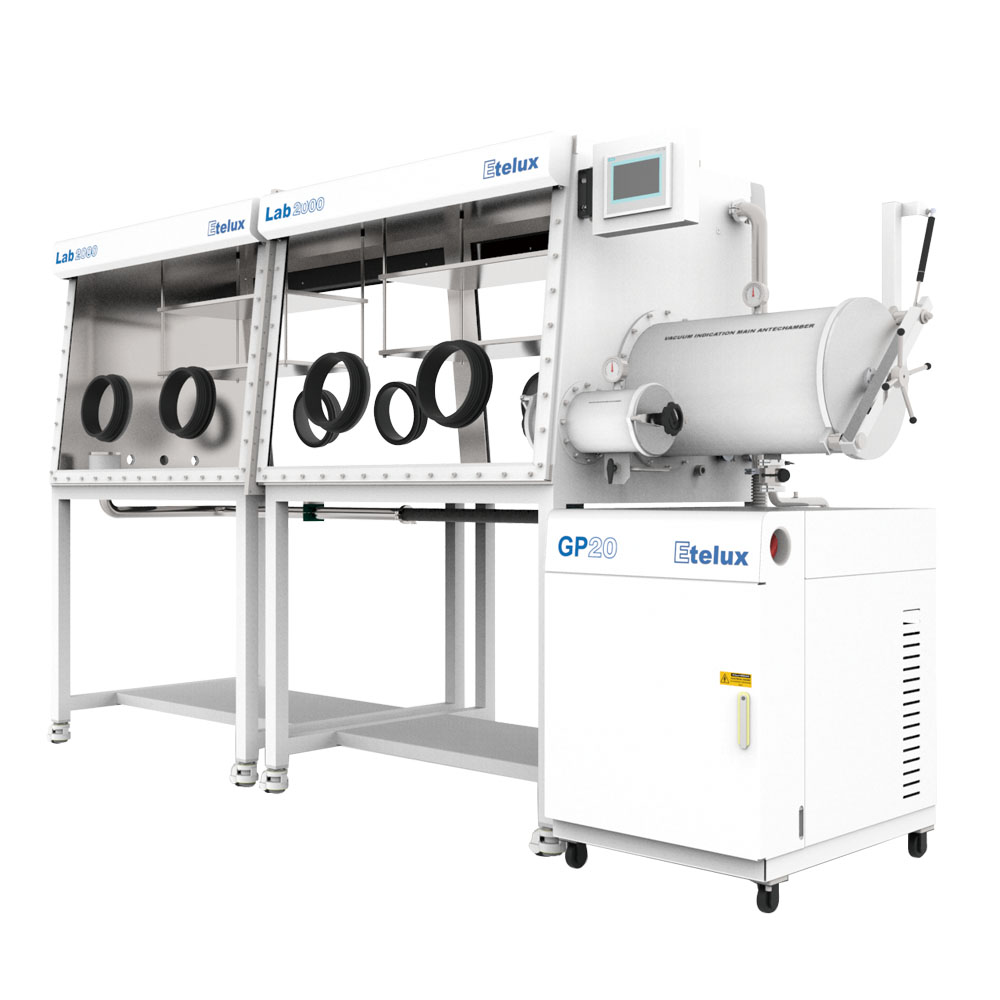
Why Powder Metallurgy Needs Glove Boxes
In powder metallurgy, reactive metals like titanium, magnesium, and rare earth elements oxidize rapidly in air. The oxide layer alters composition, creates impurities, and can even cause spontaneous combustion. Beyond material degradation, fine metal dust poses serious health risks to operators.
The bottom line: If your metal powder is oxygen or moisture sensitive, a glove box isn’t optional—it’s essential for both quality and safety.
Key Applications
Ball Milling and Mechanical Alloying
Loading powders into milling jars is the most critical step. For reactive materials like Mg-Y-Cu alloys, all loading must happen inside an argon-filled glove box with oxygen and moisture below 1 ppm.
Why so strict? If a jar is sealed in air, that oxygen is trapped for the entire milling process. Fresh surfaces created during milling immediately react, ruining the alloy.
The procedure:
- Place powders, media, and jars into the antechamber
- Perform three vacuum-purge cycles with inert gas
- Open containers, weigh powders, load jars, and seal everything inside the box
- Only remove sealed jars through the airlock
Common mistake: Partial purging is not enough. If oxygen stays above 1 ppm, oxidation continues.
Target Preparation for Sputtering
Preparing alloy targets (like GdFeCo for magneto-optical recording) requires precise composition control. Both Gd and Fe powders are extremely air-sensitive.
The workflow:
- Load all materials into the glove box through the airlock
- Perform three vacuum-purge cycles with helium
- Weigh powders to target ratio using a balance inside the box
- Mix powders in a sealed jar—milling takes about 4 hours
- Pour mixed powder into a die and perform hand-pressing inside the glove box
- Remove the die assembly and complete final pressing on a hydraulic press outside—minimize air exposure
Critical note: Once the compacted target comes out of the glove box, oxidation begins. Place it directly into a vacuum furnace. Surface oxides formed during sintering must be ground off afterward.
Reactive Metal Handling (Titanium)
Titanium powder is pyrophoric—it can ignite in air. A specialized glove box system with a heated titanium chip oxygen getter can generate ultra-pure argon continuously.
System features:
- Continuous argon flow through the box
- Heated titanium getter (800°C) adsorbs oxygen and nitrogen, producing <0.1 ppm purity
- Vacuum port for sealing ampoules inside the box
- Power feedthroughs for operating equipment
- Withdrawal ports for transferring materials without breaking containment
Annual maintenance cost: Less than $500 for argon, titanium chips, and furnace parts.
3D Printing Powder Handling
Metal powder for additive manufacturing (SLM, EBM) must be handled in inert atmosphere to prevent oxidation.
Typical workflow:
- Place powder containers into the glove box
- Purge with inert gas to required purity (<100 ppm for titanium)
- Open containers and pour powder into storage hoppers
- Transfer powder pneumatically to the printer’s screening module
- Unused powder is discharged under protective gas for recycling
Post-processing: Built parts are placed in vacuum-tight bags inside the glove box before removal, then sent to hot isostatic pressing (HIP).
Standard Operating Procedure (Quick Reference)
Before Starting
- Verify inert gas flow (0.2 SCFM minimum) and sensor readings (<1 ppm for reactive metals)
- Organize all materials and tools before opening the outer door
- Wear PPE: gloves, lab coat, respirator (for toxic powders)
Loading
- Close inner airlock door, open outer door, place materials inside
- Close outer door and perform three vacuum-purge cycles
- Open inner door and transfer materials to the main chamber
Working Inside
- Use anti-static spatulas to prevent powder scattering
- Weigh powders using a balance inside the box
- Seal all containers before removing from the glove box
Removing Materials
- Wipe containers with ethanol to remove powder contamination
- Place items in airlock, close inner door
- Open outer door and perform contamination survey (for hazardous materials)
After Finishing
- Purge the airlock with another three vacuum-purge cycles
- Leave inner door slightly open to maintain continuous inert flow
Common Mistakes to Avoid
Underestimating environmental control. Partial inerting gives false confidence—if sensors don’t show <1 ppm, oxidation is happening.
Using incompatible solvents. Some metal powders (Mg, U) react violently with methanol or acetone. Check MSDS before using any cleaner.
Neglecting static control. Static causes powder to scatter, leading to inaccurate measurements. Use anti-static tools and ion blowers.
Improper waste disposal. Collect all contaminated wipes, gloves, and powders in sealed bags inside the glove box. Never leave waste loose.
Selection Guide
| Material Type | Required Purity | Recommended Configuration |
|---|---|---|
| Standard powders (Fe, Cu, Al) | <100 ppm O₂ | Stainless steel glove box with basic purification |
| Reactive metals (Ti, Mg, Zr) | <1 ppm O₂ + H₂O | Continuous argon flow + purification + oxygen getter |
| Toxic powders (Be, Co, Ni) | Full containment | Negative-pressure with HEPA filtration |
| Nano-sized powders | <1 ppm + static control | Anti-static accessories + HEPA filter |
Conclusion
The glove box is the essential workstation for reactive metal powder handling. From ball milling to 3D printing, it protects material quality and operator safety. Success comes down to strict adherence to protocols—proper purging, continuous monitoring, and meticulous cleanup. Invest in the right configuration and follow rigorous SOPs to achieve the ultra-low contamination environment powder metallurgy demands.