
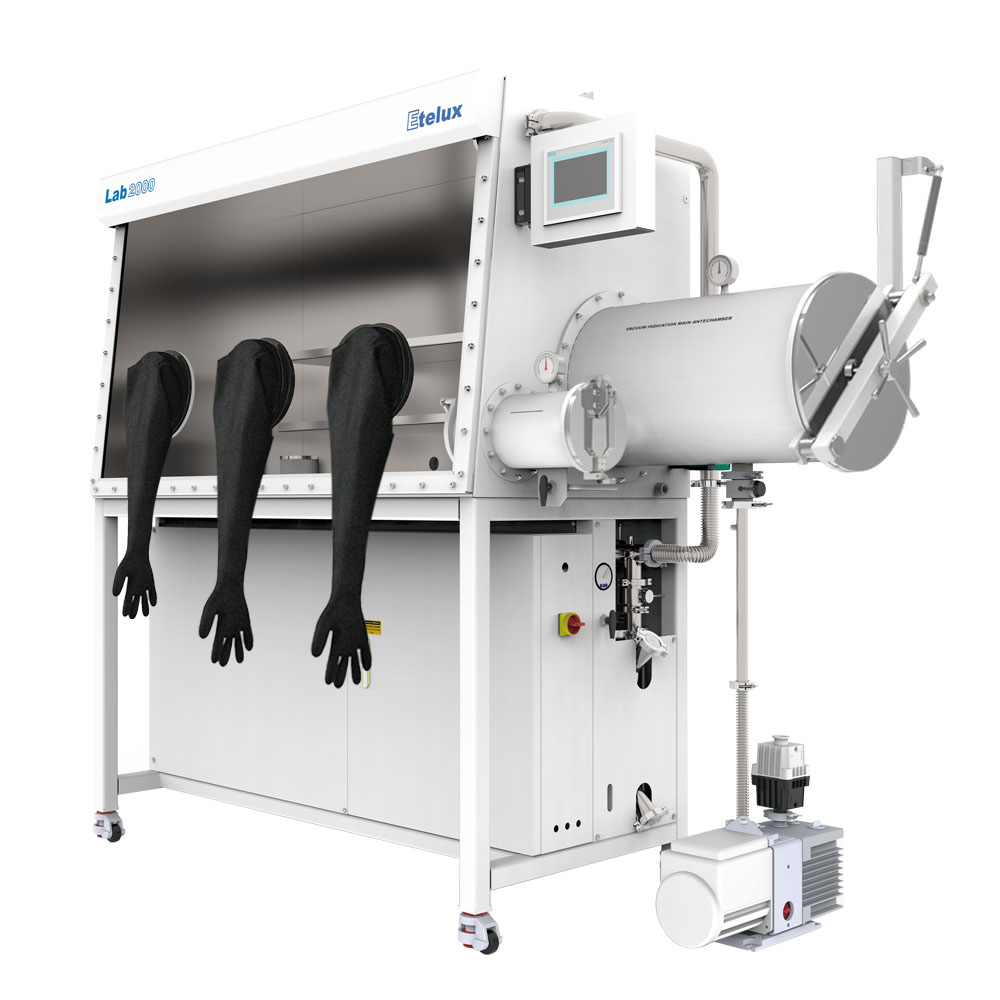
A glove box is a fully sealed, enclosed work station designed to separate internal operating space from outside ambient air. Operators handle sensitive materials via sealed gloves, creating a controlled, isolated environment for labs, new energy, semiconductor and chemical industries.
It stabilizes inert gas, low humidity and vacuum conditions, effectively preventing material oxidation, moisture damage, toxic leakage and dust contamination. For air-sensitive, flammable, corrosive and high-precision components, a glove box is essential processing equipment.
Key Components of a Glove Box
- Sealed CabinetPremium 304 stainless steel structure with tight welding ensures low leakage. Transparent acrylic options are available for basic lab use, delivering long-term airtight performance.
- Operation Gloves & View WindowChemical-resistant butyl gloves support fine manual work inside the box. High-transparent windows allow clear real-time observation of all operations.
- Transition AntechamberThe core channel for material entry and exit. It completes vacuum pumping and gas replacement to avoid outside air mixing and destroying internal water and oxygen balance.
- Circulation Purification SystemBuilt-in deoxygenation and dehumidification modules run closed-loop gas circulation. It removes residual oxygen and moisture to maintain a high-purity internal atmosphere.
- Smart Control PanelPLC touchscreen monitors oxygen content, humidity and pressure in real time. Automatic purification, fault alarm and overpressure protection ensure stable and safe operation.
How Does a Glove Box Work
1. Complete Physical Isolation
Integrated sealing design cuts off outside air, dust and moisture, building a stable independent working space as the basic guarantee for atmosphere control.
2. Initial Gas Replacement
Before use, the chamber is vacuumed and filled with high-purity nitrogen or argon. Repeated gas exchange quickly reduces internal oxygen and humidity to qualified standards.
3. Closed-Loop Continuous Purification
Tiny air infiltration is inevitable during daily operation. The purification system circulates internal gas nonstop, adsorbs impurities and keeps oxygen below 1ppm with ultra-low dew point.
4. Automatic Pressure Balance
Slight positive pressure inside stops external air infiltration. Abnormal pressure will trigger pressure relief and alarms to protect equipment and experimental samples.
Common Glove Box Types
- Inert Atmosphere Glove Box: Widely used for lithium battery research and air-sensitive material production with stable water-oxygen control.
- Vacuum Glove Box: Applied in precision electronics and special material testing under high vacuum conditions.
- Bio-Isolation Glove Box: Used in medical and pharmaceutical fields for hazardous biological sample isolation.
Main Applications
- New energy: Lithium battery assembly, raw material testing and solid battery research
- Semiconductor: Wafer handling, chip packaging and precision component processing
- Labs & chemistry: Air-sensitive synthesis and new material development
- Pharmaceutical industry: Hazardous reagent isolation and sterile operation
Why Use a Glove Box
Uncontrolled ambient air easily causes sample oxidation, damp failure and material waste. A standard glove box improves experiment success rate and production yield. Meanwhile, it isolates hazardous substances, greatly enhancing operational safety for labs and industrial production.