
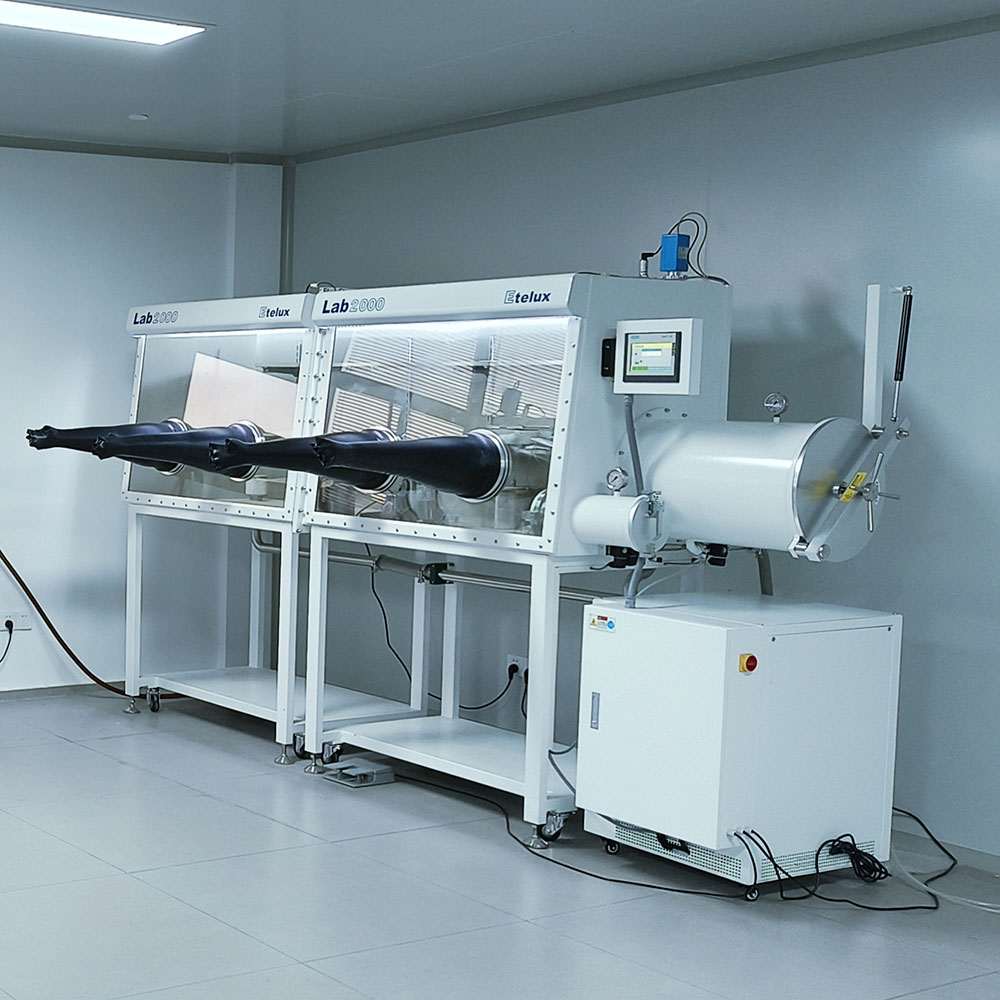
O2/H2O Level, Cleanliness, Material
Struggling to choose a glove box for your lab or plant? A mismatched unit leads to failed experiments, low efficiency and material waste. The key is precision parameter-scenario matching, not blind pursuit of high-end specs. This guide breaks down 5 core selection parameters, plus a scenario matching table and pitfalls to avoid—helping beginners choose the right unit, skip 90% of mistakes, and cut procurement/operation costs.
I. 5 Core Selection Parameters (Must-Know for Practicality)
1. O2/H2O Content (Ultimate Core)
The most critical indicator for experiment/production success, with scenario-specific requirements:
- Research labs (anhydrous/oxygen-free synthesis): ≤1ppm (≤0.1ppm for high-precision tests)
- Lithium battery industry (pole piece/cell production): ≤10ppm
- General industrial use (inert gas protection): ≤50ppm
Critical Note: Confirm the long-term stable value (not instantaneous test data) to avoid operational fluctuations.
2. Leak Rate (Sealing Criterion)
Measures airtightness (unit: atm·cc/s; smaller = better):
- High-precision scenarios (research, lithium battery, semiconductor): ≤1×10^-7 atm·cc/s
- General use: ≤1×10^-6 atm·cc/s
Critical Note: Request a 3rd-party test report; conduct regular sealing checks post-purchase.
3. Material (Durability & Adaptability)
Choose based on contact materials (corrosives/organic solvents) and scenarios:
Box Body
- 304/316L Stainless Steel: Universal (90% scenarios); 316L for acid/alkali/salt spray contact
- Acrylic (PMMA): Low-cost, high transparency (basic labs/teaching); avoid organics/high temp
- Carbon Steel: Low-cost but rust-prone; not for labs
Operating Gloves
- Nitrile: Oil/solvent-resistant, cost-effective (general use)
- Butyl Rubber: Anti-corrosion, airtight (anhydrous/oxygen-free/high-risk scenarios)
- PVC: Ultra-low cost (basic protection only, poor elasticity/corrosion resistance)
4. Cleanliness (Precision Scenarios Only)
Measures dust particles (class rating; no extra pursuit for conventional use):
- General scenarios: Class 1000 (basic dust-free)
- Precision use (semiconductor/photovoltaic): Class 100/10 (with HEPA filter)
Critical Note: Higher cleanliness = higher procurement/filter replacement costs.
5. Purification System & Chamber Configuration
Matches operation frequency/batch size for efficiency:
- Purification: Single cycle (intermittent use, low cost); dual cycle (continuous/high-frequency production, stable O2/H2O)
- Transfer Chamber: Single door (small-batch transfer); double door (no atmosphere disruption for mass production)
- Operation Chamber: ≥0.8m³ (single person); ≥1.2m³ (two people)
II. 3 Key Pitfalls to Avoid
- Skip over-specs: High parameters mean higher upfront/ongoing costs—match only your actual needs.
- Verify after-sales: Prioritize manufacturers with 24/7 support and local service points (critical for precision equipment maintenance).
- Confirm custom design in advance: Avoid post-purchase modifications (sealing damage risk) for special needs (oversized chamber, multi-station, anti-corrosion).
III. Scenario Selection Matching Table
| Application Scenario | O2/H2O Requirement | Leak Rate Standard | Recommended Material | Core Configuration |
|---|---|---|---|---|
| Research Lab (Anhydrous/Oxygen-Free) | ≤1ppm (≤0.1ppm high-prec) | ≤1×10^-7 atm·cc/s | 304/316L Stainless Steel | Dual-cycle purification, double-door transfer |
| Lithium Battery Production | ≤10ppm | ≤1×10^-7 atm·cc/s | 304 Stainless Steel | Dual-cycle purification, large operation chamber |
| Semiconductor/Photovoltaic Production | ≤1ppm | ≤1×10^-7 atm·cc/s | 316L Stainless Steel | Dual-cycle + HEPA filter + double-door transfer |
| General Industrial Inert Protection | ≤50ppm | ≤1×10^-6 atm·cc/s | 304 Stainless Steel/Acrylic | Single-cycle purification, single-door transfer |
| Chemical/Electroplating (Corrosives) | ≤10ppm | ≤1×10^-7 atm·cc/s | 316L Stainless Steel | Butyl rubber gloves + anti-corrosion seals |
Conclusion
Glove box selection is about fitting your scenario, not choosing the “best”. Focus on the three core indicators: O2/H2O content, leak rate and material, and match with your precision needs, contact materials and operation frequency to avoid mistakes easily.
If you’re unsure about the right solution for your scenario, contact our technical team for free one-on-one guidance and a customized equipment plan tailored to your production/lab details—no wasted spending, perfect fit for your needs.